



IT Focus Shifting to New ‘Smart’ Technologies, BPM and Security

Apple has set its sights on the enterprise. This is nothing new, of course, as Apple has wanted to play a part in the world of professional data communications for decades.
But with its hold on consumer gadgets, and the idea that most knowledge workers would prefer to use a single client device for both their personal and professional lives, the company is now angling to invade the workplace in a big way.
Apple announced last month that the company earned about $25 billion in revenues from enterprise channels last year, which would be a stunning result for any other company but actually amounts to about 11 percent of Apple’s total haul. The company is busy working with IBM and others to make the iOS operating system more compatible with the enterprise back end, but as ZDNet’s Steve Ranger points out, rigid pricing and a high level of secrecy regarding future development paths make it hard for the enterprise to fully commit to the Apple platform. As well, business organizations are much less willing to pay the premium prices that Apple charges to consumers.
On this front, at least, Apple has shown a recent willingness to ease up on the price tag, particularly for older platforms like the desktop. The company is developing a lower-priced Mac based on the A9x processor that some analysts believe could give Apple a wedge into enterprise client infrastructure, says Seeking Alpha’s J.M. Manness. While it is true that desktop sales continue to slide, a more competitive Mac could help boost Apple’s share of the market, and could then be used as leverage to support higher use of more profitable smartphone and tablet devices and their associated application ecosystems that are a big driver of Apple revenues. Gartner, for one, noted that while many PC makers saw declining revenues in the past year – some by double digits – Apple eked out a 1.5 percent gain.
One fly in the ointment here is security, says the Wall Street Journal’s Rachel King. As Apple seeks to up its stake in the enterprise, hackers are increasingly looking to break into OS X. A recent report by security specialists Bit9 + Carbon Black claimed that attacks against OS X were five times more prevalent in 2015 than in the previous five years combined, and this trend is expected to accelerate as Macs and MacBooks invade the enterprise space and presumably come to contain more information worth stealing. The situation is made even worse by the lack of OS X support by many endpoint security vendors, leaving the enterprise to fend for itself when porting workloads over to Apple products.
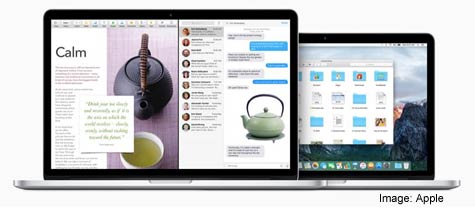
Neither Rome nor Apple was built in a day, however, so the company’s enterprise plans will take at least half a decade to come to fruition, says PC Mag’s Tim Bajarin. It is worth noting that Apple has been able to draw $25 billion from the enterprise despite the fact that it does not have dedicated sales, support or any appreciable organization focused on the sector at all. If the company makes a serious play for the enterprise, and recent comments from CEO Tim Cook indicate it will, then Apple could easily double its enterprise revenues by the end of the decade, making it one of the most powerful voices in the future direction of professional computing environments.
Another aspect to consider in Apple’s play for the enterprise is the fact that data infrastructure, including client resources, is undergoing such momentous change, with the very real possibility that before long much of it could wind up under the control of third-party cloud providers, not the enterprises that actually use the data. But if anyone can weather this storm, it is probably Apple, considering that its products are doing more to effect this change than practically any other technology vendor.
It’s fair to say, then, that time is on Apple’s side. The company is in a solid financial position even as demand for its consumer platforms is starting to level off. If it can find fertile new ground in the enterprise, it will be well-positioned to emerge as the company to beat, or to emulate, as data architectures transition to the 21st Century digital economy.
Arthur Cole writes about infrastructure for IT Business Edge. Cole has been covering the high-tech media and computing industries for more than 20 years, having served as editor of TV Technology, Video Technology News, Internet News and Multimedia Weekly. His contributions have appeared in Communications Today and Enterprise Networking Planet and as web content for numerous high-tech clients like TwinStrata and Carpathia. Follow Art on Twitter @acole602.