
SHARE
Facebook X Pinterest WhatsApp

Tempered Networks Adds Support for Global IP Namespaces

How to Monitor Networks While On Vacation One of the more painstaking tasks IT organizations routinely undertake is trying to move the location of a specific endpoint. Physically moving the device is one thing. Getting everything attached to the network to recognize where that device has been moved is often another matter altogether. To remove […]

Written By
MV
Mike Vizard
Aug 3, 2016
Slide Show

How to Monitor Networks While On Vacation

One of the more painstaking tasks IT organizations routinely undertake is trying to move the location of a specific endpoint. Physically moving the device is one thing. Getting everything attached to the network to recognize where that device has been moved is often another matter altogether.

To remove all the friction associated with that process, Tempered Networks today announced it has extended its implementation of a Host Identity Protocol (HIP) network to include support for a global IP Namespace capability.

It’s based on an Identity-Defined Network (IDN) Fabric that Tempered Networks uses to create a network overlay based on HIP and cryptographic identities, and Marc Kaplan, vice president of security architecture for Tempered Networks, says that because each endpoint has been assigned a specific cryptographic identity, it can be moved in a way that preserves its IP address regardless of where it physically winds up on the network.
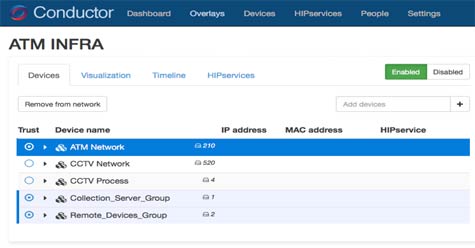
Tempered Networks Adds Support for Global IP Namespaces

The announcement was made at the Black Hat USA 2016 conference. Kaplan further says cryptographic identities coupled with a global IP Namespace capability also means that two endpoints can open a secure communications channel by using, for example, the File Transfer Protocol (FTP) to share files directly between two IP addresses.

“We also have other use cases involving disaster recovery and making data set migrations simpler,” says Kaplan.

Kaplan concedes that HIP networks are not likely to usurp traditional networks. But they do offer an alternative for sensitive corporate and industrial applications that require a more closed networking environment. That approach not only makes those networks fundamentally more secure because only devices with cryptographic identities can be attached to the network, it also enables IT organizations to provide functionality that would be difficult to replicate using more traditional approaches to networking.

Save

Save

MV

Michael Vizard is a seasoned IT journalist, with nearly 30 years of experience writing and editing about enterprise IT issues. He is a contributor to publications including Programmableweb, IT Business Edge, CIOinsight and UBM Tech. He formerly was editorial director for Ziff-Davis Enterprise, where he launched the company’s custom content division, and has also served as editor in chief for CRN and InfoWorld. He also has held editorial positions at PC Week, Computerworld and Digital Review.

Recommended for you...

Observability: Why It’s a Red Hot Tech Term
Tom Taulli
Jul 19, 2022
Top GRC Platforms & Tools in 2022
Jira vs. ServiceNow: Features, Pricing, and Comparison
Surajdeep Singh
Jun 17, 2022
IT Business Edge Logo

The go-to resource for IT professionals from all corners of the tech world looking for cutting edge technology solutions that solve their unique business challenges. We aim to help these professionals grow their knowledge base and authority in their field with the top news and trends in the technology space.

Property of TechnologyAdvice. © 2025 TechnologyAdvice. All Rights Reserved

Advertiser Disclosure: Some of the products that appear on this site are from companies from which TechnologyAdvice receives compensation. This compensation may impact how and where products appear on this site including, for example, the order in which they appear. TechnologyAdvice does not include all companies or all types of products available in the marketplace.