

How to Mitigate the Risk of Data Loss and Disruption in 2016

Following a spate of high-profile distributed denial of service (DDoS) attacks such as the one that took down Web sites operated by the British Broadcasting Company (BBC), awareness of DDoS attacks as a favorite tool of entities trying to make a political statement or simply overwhelm an organization’s IT security defenses is on the rise.
The good news is that thanks to advances in automation and the rise of software-defined networking (SDN) it’s becoming simpler to defend against these attacks. To that end, Nexusguard recently introduced Nexusguard AI, a service that makes it possible to re-route network traffic in real time across multiple ISPs.
Bill Barry, executive vice president of global strategy at Nexusguard, says Nexusguard AI works by balancing the real-time tracking of ISP resources against data center scrubbing capacity, attack type, and specific customer profiles to increase the effectiveness of these mitigation techniques during an attack. As a result, Barry claims that Nexusguard is the first DDoS mitigation service provider to automate the orchestration of Internet traffic in a way that optimizes all available resources during the actual attack.
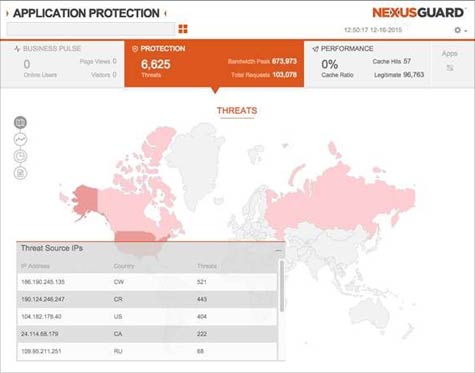
These days, it’s almost impossible to track down the source of any given DDoS attack. But Barry says that doesn’t mean organizations are defenseless. By taking advantage of SDN technologies, according to Barry, organizations can aggregate the bandwidth provided by multiple ISPs to prevent a DDoS attack from completely taking them offline. Barry notes that the average network administrator can no longer keep up with multiple attacks, which, he says, is why Nexusguard created a service that uses rules to intelligently reroute network traffic in the event of an attack. The result is essentially a self-healing network.
Clearly, digital criminals and politically motivated groups all have access to advanced IT attack expertise that most IT organizations today are not in a position to defend against. In fact, as IT security increasingly turns into a game of spy versus spy, it’s becoming more obvious than ever that IT organizations will need to rely on a lot more automated external help if they hope stay online in 2016 and beyond.