
SHARE
Facebook X Pinterest WhatsApp

Docker Makes Push into Unikernel Operating Systems via Acquisition

2016 Software Trends: The Evolution of Enterprise Software In a move that signals a significant expansion of its core mission, Docker today announced it has acquired Unikernel Systems, a provider of tools that compile source code into a lightweight custom unikernel operating system that consists only of the components needed to run a specific piece […]

Written By
MV
Mike Vizard
Jan 21, 2016
Slide Show

2016 Software Trends: The Evolution of Enterprise Software

In a move that signals a significant expansion of its core mission, Docker today announced it has acquired Unikernel Systems, a provider of tools that compile source code into a lightweight custom unikernel operating system that consists only of the components needed to run a specific piece of application logic.

Rather than deploy a general-purpose operating system, Unikernel Systems CTO Anil Madhavapeddy says unikernels are ideal for a range of applications such as devices attached to the Internet of Things (IoT), or cloud computing environments looking to optimize IT infrastructure utilization rates to their maximum possible.
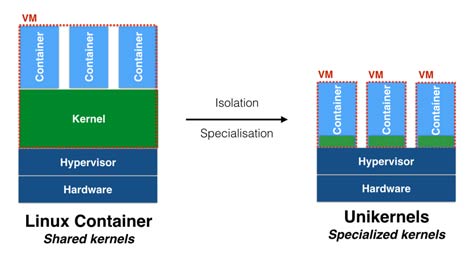
Docker-diagram

Because a traditional operating system is designed to support a broad range of applications, IT organizations wind up having to support and secure a larger amount of code than they may need for a specific application. Unikernels provide an alternative approach where the amount of operating systems code required is essentially dictated by the amount of functionality that needs to be included in any given piece of application logic. Unikernel technology, for example, is often used in single-function appliances in place of operating systems such as Windows or a distribution of Linux.

Madhavapeddy says Docker not only envisions a world where Docker containers are deployed on top of unikernels, but also scenarios where unikernels themselves are deployed as Docker containers. In that latter scenario, Madhavapeddy says it will become simpler for developers to create a unikernel operating system using the same tooling used to create and manage Docker containers.

As part of a general move toward reactive systems, containers are rapidly transforming enterprise IT architectures using much lighter-weight frameworks and components. It’s only natural that same thinking will soon be applied to the operating system itself.

MV

Michael Vizard is a seasoned IT journalist, with nearly 30 years of experience writing and editing about enterprise IT issues. He is a contributor to publications including Programmableweb, IT Business Edge, CIOinsight and UBM Tech. He formerly was editorial director for Ziff-Davis Enterprise, where he launched the company’s custom content division, and has also served as editor in chief for CRN and InfoWorld. He also has held editorial positions at PC Week, Computerworld and Digital Review.

Recommended for you...

Observability: Why It’s a Red Hot Tech Term
Tom Taulli
Jul 19, 2022
Top GRC Platforms & Tools in 2022
Jira vs. ServiceNow: Features, Pricing, and Comparison
Surajdeep Singh
Jun 17, 2022
IT Business Edge Logo

The go-to resource for IT professionals from all corners of the tech world looking for cutting edge technology solutions that solve their unique business challenges. We aim to help these professionals grow their knowledge base and authority in their field with the top news and trends in the technology space.

Property of TechnologyAdvice. © 2025 TechnologyAdvice. All Rights Reserved

Advertiser Disclosure: Some of the products that appear on this site are from companies from which TechnologyAdvice receives compensation. This compensation may impact how and where products appear on this site including, for example, the order in which they appear. TechnologyAdvice does not include all companies or all types of products available in the marketplace.