
A unified approach to data storage is long overdue in most organizations. In fact, you could argue that most storage used in IT is unmanaged. Sure, there are people that spend a lot of time allocating portions of storage arrays to specific applications. But for the past 20 years, the general approach to storage has been to throw hardware at the problem, with the end result being that now we have storage arrays all over the data center that not only take up limited amounts of space, but burn a lot of energy.
This state of affairs exists because every application owner pretty much demanded dedicated storage resources in order to limit I/O bottlenecks. But now that I/O bandwidth is improving, we’re starting to see the advent of unified storage systems. For instance, Scale Computing just extended its unified storage product lineup to include the N05 Starter Cluster, which combines storage area network (SAN) and network-attached storage (NAS) in a single unit that delivers 1.5 TB of storage at a price of $2,500 per node.
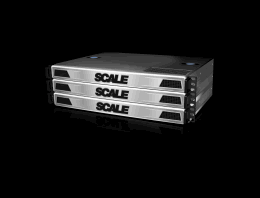 Scale Computing CTO Jason Collier says the Scale Computing approach then allows customers to scale out by simply adding nodes to the cluster, which is then all managed under a common file system. The various storage protocols that need to be dealt with are handled by a layer of abstraction in the storage system that automatically identifies the appropriate communications protocol for accessing SAN or NAS storage.
It seems like every storage vendor out there is talking about unified storage to one degree or another. Chances are that unified storage is going to take hold in the small-to-medium (SMB) sector before the data center simply because SMB companies don’t have people to manage storage. So while a Fortune 1000 company is likely to have a dedicated SAN specialist, most SMB companies are looking for the most efficient approach to managing storage possible.
What all this means is that the economics of storage are changing, particularly as IT organizations focus more on increasing the utilization rates of their storage arrays and the total cost of managing them. Rather than having dedicated storage systems, the future of storage is going to be shared. To what degree that means some form of storage virtualization or more intelligent approaches to managing data remains to be seen.
Data storage is about to go through its most significant transformation in the better part of a decade. The transformation will not only bring SAN and NAS together, it will bring backup and primary storage together as well. And while the amount of data that needs to be managed will continue to grow, the tools we use to make sure that there are as few copies of the data as possible in the enterprise are getting a lot better too.
Ultimately, there’s hope when it comes to keeping a lid on storage costs. It’s not likely that storage spending is going to decrease any time soon. But the rate of growth on storage spending can definitely be brought under control even as the amount of data to be managed continues to grow exponentially.