



Mobility: How It’s Changing Our Lives

It seems that the great increase in cellular devices would be a tremendous advantage in times of crisis. After all, if most people have smartphones, tablets and other communication devices, help can be called, evacuations organized, first responders contacted and other important tasks taken care of.
While all of this is true, to some extent, there is a rather significant downside. Rajant Software’s Marty Lamb, writing at Network Computing, says that the onslaught of IP-based platforms and devices actually has left us worse off than we were on September 11, 2001.
Lamb writes that the problem is that we have put all of our communications eggs in one basket:
An underlying problem, however, is that most of these technologies — everything from cloud-managed wireless LAN systems to application management software and established public safety networks — rely on the commercially available cellular wireless spectrum for connectivity.
Lamb says that the reliance on cellular is troubling because network access is shut down in the case of a terrorist attack to prevent remote detonation of bombs. Even if the network remains operational during a non-terrorist emergency, the huge increase in traffic is simply overwhelming.
Taylor Soper at GeekWire offers an interesting look at how tenuous our cell service can be. During the Seattle Seahawks opening game at CenturyLink Field and during the parade celebrating the Super Bowl win last year, fears of overuse were so great that residents were asked to curtail their cell phone use.
That raised some pretty significant questions about what would happen if there was an emergency. Soper notes that the police and firefighters have a distinct network, so they can communicate internally and with each other. That doesn’t mean, however, that people will be able to reach them if they are in need. The story details how AT&T, Verizon and Sprint are confronting the issue.
One upcoming government-funded project is called the First Responder Network Authority or FirstNet. It was created under the Middle Class Tax Relief and Job Creation Act of 2012. FirstNet is an independent authority under the National Telecommunications and Information Administration (NTIA) that is charged with creating and maintaining what HS Today says is “the first nationwide public safety broadband network for law enforcement, firefighters, emergency medical service professionals and other public safety entities.”
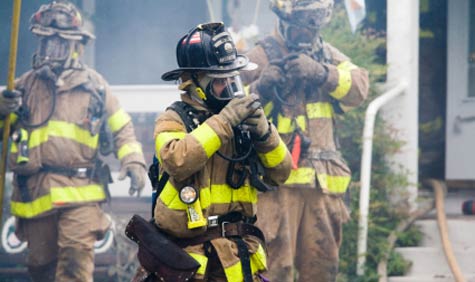
FirstNet last week released a 15-page request for information (RFI) that is said to be a tangible sign that the network is on its way to being created.
In the meantime, it will be important to properly prepare our cell phones in case of emergencies. Earlier this month, FEMA offered some tips: Keep contacts up to date with the people who need to be contacted, rely more on texting than voice calls during an emergency, use social media, store documents electronically in a safe place, download important apps such as those for FEMA and the Red Cross, and invest in solar chargers or hand cranks that can enable continued operations even if power goes down.
Carl Weinschenk covers telecom for IT Business Edge. He writes about wireless technology, disaster recovery/business continuity, cellular services, the Internet of Things, machine-to-machine communications and other emerging technologies and platforms. He also covers net neutrality and related regulatory issues. Weinschenk has written about the phone companies, cable operators and related companies for decades and is senior editor of Broadband Technology Report. He can be reached at cweinsch@optonline.net and via twitter at @DailyMusicBrk.