
SHARE
Facebook X Pinterest WhatsApp

Velostrata Helps Pit AWS Against Microsoft Azure

How to Manage Multiple Cloud Relationships Most IT organizations appear to be voting with their wallets for a three-pronged approach to cloud computing, spanning Amazon Web Services (AWS), Microsoft Azure and their own local private cloud. To facilitate the integration of private clouds running in a local data center with public cloud, Velostrata today announced […]

Written By
MV
Mike Vizard
Feb 15, 2017
Slide Show

How to Manage Multiple Cloud Relationships

Most IT organizations appear to be voting with their wallets for a three-pronged approach to cloud computing, spanning Amazon Web Services (AWS), Microsoft Azure and their own local private cloud. To facilitate the integration of private clouds running in a local data center with public cloud, Velostrata today announced it is adding support for Microsoft Azure alongside existing support for AWS.

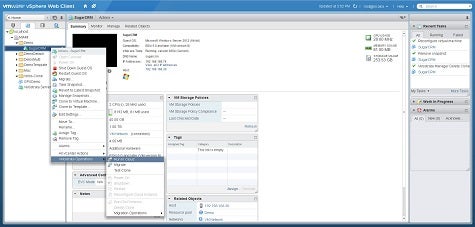
Velostrata has developed a framework for integrating VMware environments with AWS by making it simpler to move workloads between those environments without having to copy data between them. Now Velostrata is extending that same capability out to Microsoft Azure.

Ady Degany, chief product officer for Velostrata, says the next major Velostrata effort will enable IT organizations that have standardized on VMware to move application workloads between public clouds without necessarily having their own private cloud in between them.

In general, Degany says, the Velostrata platform levels the cloud playing field by making it simpler for IT organizations to deploy application workloads as they best see fit. IT organizations are not moving application workloads between clouds. But they do want to be able to extract better pricing options from cloud service providers by being able to deploy existing application workloads based on VMware in either AWS or Azure.

“In terms of cloud pricing, you’re seeing IT organizations exercise a lot of creativity,” says Degany.
VelostrataAWS

Of course, the key to being able to maintain public cloud neutrality is to not invoke a lot of proprietary application programming interfaces (APIs) that cloud service providers expose to entice organizations to use some of their more advanced services. Assuming that level of discipline is maintained, it’s only a matter of time before the fierce competition between cloud service providers gives IT organizations some much needed leverage.

Save

MV

Michael Vizard is a seasoned IT journalist, with nearly 30 years of experience writing and editing about enterprise IT issues. He is a contributor to publications including Programmableweb, IT Business Edge, CIOinsight and UBM Tech. He formerly was editorial director for Ziff-Davis Enterprise, where he launched the company’s custom content division, and has also served as editor in chief for CRN and InfoWorld. He also has held editorial positions at PC Week, Computerworld and Digital Review.

Recommended for you...

Observability: Why It’s a Red Hot Tech Term
Tom Taulli
Jul 19, 2022
Top GRC Platforms & Tools in 2022
Jira vs. ServiceNow: Features, Pricing, and Comparison
Surajdeep Singh
Jun 17, 2022
IT Business Edge Logo

The go-to resource for IT professionals from all corners of the tech world looking for cutting edge technology solutions that solve their unique business challenges. We aim to help these professionals grow their knowledge base and authority in their field with the top news and trends in the technology space.

Property of TechnologyAdvice. © 2025 TechnologyAdvice. All Rights Reserved

Advertiser Disclosure: Some of the products that appear on this site are from companies from which TechnologyAdvice receives compensation. This compensation may impact how and where products appear on this site including, for example, the order in which they appear. TechnologyAdvice does not include all companies or all types of products available in the marketplace.