
For a lot of IT organizations, the rise of mobile computing has meant suddenly doubling or even tripling the number of devices that need to be supported, which obviously puts some strain on their IT management systems. In fact, many of them are now looking at upgrading those systems to accommodate not only a diverse range of devices, but also a new approach to managing IT that is more end-user-centric.
Rather than solely focusing on devices, IT organizations are trying to provide a more holistic approach to managing the end-user experience across multiple classes of devices. To help IT organizations achieve that goal Kaseya today released an upgrade to its IT management software that includes a Discovery module that identifies when new devices have been attached to the corporate network.
In addition, the new release of Kaseya K2 scales better to accommodate up to 25,000 end points per server that most IT organizations need to manage and adds support for Microsoft Windows 8 and Windows 2012, Apple OS X Mountain Lion and iOS 6 operating systems.
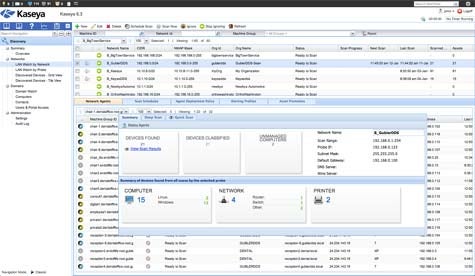
Available as a service or as software that can be deployed on premise, Gerald Beaulieu, director of product marketing for Kaseya K2, says the new release provides a differentiated management experience in that in addition to unifying the management of multiple devices, it includes a Standard Content Pack that provides predefined procedures, monitor sets, reports and policies that make the job of actually administering IT a lot simpler.
Like it or not, the job of managing IT has become a lot more complex with the rise of mobile computing. Unfortunately, most existing systems management systems were not designed to handle such complexity, which has resulted in something of an arms race to provide those capabilities between providers of systems management applications. With more IT organizations than ever evaluating their options, competition between systems management vendors has significantly increased in intensity. In general, that’s a good thing for most IT organizations assuming, of course, they have the budget available to fund an upgrade to their systems — without which managing complex IT environments will continue to be a pretty painful experience.