SHARE
Facebook X Pinterest WhatsApp

ioFABRIC Applies AI to Minimize Data Storage Costs

Every time an IT organization adds another cloud, container or type of virtual machine to an environment, it exacerbates an already complex set of storage management challenges. To help relieve that headache, ioFABRIC has updated a data fabric spanning all those platforms to include artificial intelligence (AI) technologies that automatically identify the lowest cost storage […]

Written By
MV
Mike Vizard
Sep 1, 2017

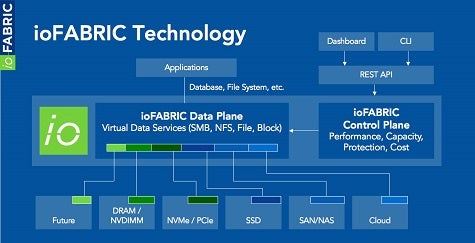
Every time an IT organization adds another cloud, container or type of virtual machine to an environment, it exacerbates an already complex set of storage management challenges. To help relieve that headache, ioFABRIC has updated a data fabric spanning all those platforms to include artificial intelligence (AI) technologies that automatically identify the lowest cost storage option available that meets the performance requirements defined in a policy set by an IT administrator.

Andrew Flint, vice president of marketing for ioFABRIC, says rather than having to rely on storage administrators to figure all that out for each application workload, ioFABRIC Vicinity 3.0 now makes it possible to apply machine learning algorithms and other forms of AI to automate storage cost optimization across multiple platform options.

“Basically, you can set it and forget it,” says Flint.

Flint says ioFABRIC also includes tools for detecting ransomware attacks as well as employing snapshots and replication in a way that makes data continuously available across multiple sites. That capability eliminates the need to manage specific recovery time and point objectives, says Flint.

In general, Flint says, ioFABRIC provides a vendor-neutral approach to managing storage that prevents IT organizations from ever having to be locked into a single storage system. In addition, Flint notes that ioFABRIC has already been tested to work against emerging storage technologies such as NVMe hosts and 3D X Point non-volatile memory that are expected to become more prevalent in 2018.
iofabric1

Organizations that have dedicated storage management specialists are becoming increasingly rare. These days, IT generalists are employing higher levels of automation to manage compute, storage and even networking tasks. The challenge now is figuring out a way to apply a common means for automating those functions across as many heterogeneous systems as possible.

MV

Michael Vizard is a seasoned IT journalist, with nearly 30 years of experience writing and editing about enterprise IT issues. He is a contributor to publications including Programmableweb, IT Business Edge, CIOinsight and UBM Tech. He formerly was editorial director for Ziff-Davis Enterprise, where he launched the company’s custom content division, and has also served as editor in chief for CRN and InfoWorld. He also has held editorial positions at PC Week, Computerworld and Digital Review.

Recommended for you...

Observability: Why It’s a Red Hot Tech Term
Tom Taulli
Jul 19, 2022
Top GRC Platforms & Tools in 2022
Jira vs. ServiceNow: Features, Pricing, and Comparison
Surajdeep Singh
Jun 17, 2022
IT Business Edge Logo

The go-to resource for IT professionals from all corners of the tech world looking for cutting edge technology solutions that solve their unique business challenges. We aim to help these professionals grow their knowledge base and authority in their field with the top news and trends in the technology space.

Property of TechnologyAdvice. © 2025 TechnologyAdvice. All Rights Reserved

Advertiser Disclosure: Some of the products that appear on this site are from companies from which TechnologyAdvice receives compensation. This compensation may impact how and where products appear on this site including, for example, the order in which they appear. TechnologyAdvice does not include all companies or all types of products available in the marketplace.