


Monster – the world’s largest and most well known employment website – released findings from an international survey looking into workplace stress. The poll’s revelations were grim, with 42 percent of U.S. respondents revealing that they had “purposely changed jobs due to a stressful work environment.” Even more troubling was the news that 66 percent of their employers had done “nothing” to alleviate the stress that had precipitated their resignations.
Considering that turnover can cost an organization up to 213 percent of a high-impact employee’s salary, savvy leaders know that it’s important to appreciate that big problems start with small signs. Drs. Dennis and Michelle Reina (authors of “Trust and Betrayal in the Workplace” and “Rebuilding Trust in the Workplace”) have pinpointed eight common behaviors that team leaders should look for and address before they escalate into big organizational failures – lost contracts, missed deadlines, budget overruns, and the loss of key team members.
Download a free excerpt from “Trust and Betrayal in the Workplace.”
Drs. Dennis and Michelle Reina are co-founders of Reina, A Trust Building Consultancy and co-authors of “Trust and Betrayal in the Workplace” and “Rebuilding Trust in the Workplace.” Their clients include American Express, AstraZeneca, Johnson & Johnson, MillerCoors, the U.S. Army, Harvard, Yale, and Walt Disney World. Their best-selling business book Trust and Betrayal in the Workplace won a 2007 Nautilus Book Award and a 2008 Axiom Business Book Award.

Click through for eight signs that can signal trouble in your team, as identified by Drs. Dennis and Michelle Reina, co-founders of Reina, A Trust Building Consultancy.
Download a free excerpt from “Trust and Betrayal in the Workplace.”
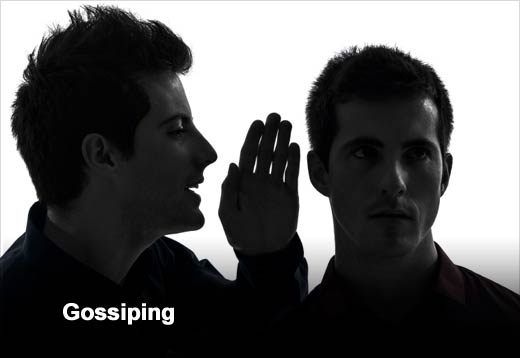
Gossiping
Instead of talking directly to the individual causing concern, team members talk about the issue to everyone else. Gossip and “back biting” becomes the norm, and serves as a destructive outlet to relieve stress.

Engaging in ‘The Blame Game’
When taking a risk that doesn’t produce immediate results, team members point their fingers at others, rather than treating the situation as a learning opportunity for the good of the organization.

Going through the motions
Rather than bringing their best effort forward, team members simply go through the motions to meet the status quo. “This organization won’t get any more from me” becomes their inner mantra.

Jockeying for position
Team members try to make themselves look good at the expense of others.

Slipping into survival mode
Team members focus on simply getting the job done, and lose sight of their relationships with others. They stop connecting as people on a compassionate, humane level.
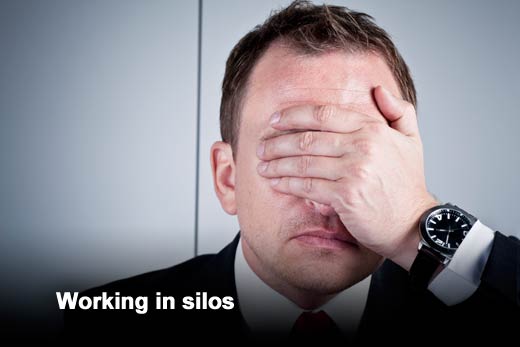
Working in silos
The blinders are put on, and team members focus exclusively on their own work, at the expense of the bigger picture. They stop collaborating and fail to see how their work impacts others.

Taking credit
Team members take credit for work they did not perform, or did not perform alone.

Abrupt and abrasive
Rather than speaking constructively, outbursts become the norm.

Leader’s Toolkit to Address Stress-Induced and Stress-Perpetuating Behaviors:
Fully observe and acknowledge signs of stress: Make it safe for team members to talk about issues and concerns. Listen for the impact. Allow them to express their frustrations, feelings and needs.
Reframe: Provide team members with support to help them consider the bigger picture, to provide benefit of the doubt and to explore options for how they can respond to stressful situations with compassion.
Take responsibility: People do not always have control over what circumstances provide stress. However, they do have control over how to respond. Support your team members in taking responsibility for their own behaviors and educate them in what they can to do relieve stress.