

Six Details Your Big Data Provider Won’t Tell You

Looking to make data integration a routine task for end users rather than an expensive challenge for developers, Bedrock Data today launched a namesake cloud service through which data can be ingested and then exported out into any other data format.
Bedrock Data CEO John Marcus says the service is based on a proprietary data type developed by Bedrock. End users can import any document into the service, where it is then converted to the Bedrock data type. They can then choose to export that same data into any other document format. Furthermore, Marcus says the Bedrock Data service keeps track of updates to documents, which can be updated every five minutes.
Fresh off of raising just over another $3 million in funding, Marcus says the end goal is to turn data integration into a function that end users simply invoke, versus requiring organizations to spend months deploying integration platforms that very expensive developers can use to only connect specific applications on a point-to-point basis. In contrast, Marcus says pricing for the Bedrock Data service running on the Google Compute Engine service starts at $149 per month for 20,000 objects tracked.
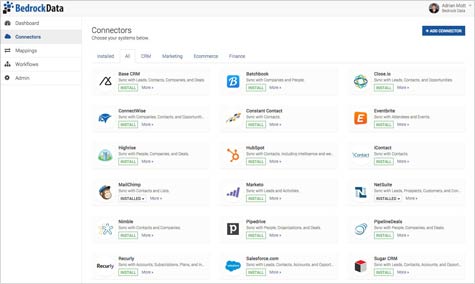
The degree to which a service such as Bedrock Data will eliminate the need for professional development services remains to be seen. But it is apparent that many needs for data integration are never met, simply because most organizations perceive such projects as being too complex and expensive to undertake.
Perhaps more troubling to the internal IT organization is the simple fact that many of the application development projects that make up their backlog involve relatively trivial amounts of data integration that might better be handled by a cloud service. Much like the rise of the “citizen developer,” there’s no doubt that the day of the “citizen integrator” is also upon us. While some folks in IT might find that threatening, the hope is that rather than focusing on data integration so much, internal IT organizations will find much more compelling ways to add value to the business.