
SHARE
Facebook X Pinterest WhatsApp

New Relic Adds Support for Go Programming Language

Embracing the Mobile Development Trends of 2016 There are more programming languages in use than ever before. That creates some significant challenges when it comes to monitoring all the applications developed using that broad array of languages. Starting today, New Relic is adding to the support it already provides for Java, .NET, Node.js, PHP, Python […]

Written By
MV
Mike Vizard
Jul 11, 2016
Slide Show

Embracing the Mobile Development Trends of 2016

There are more programming languages in use than ever before. That creates some significant challenges when it comes to monitoring all the applications developed using that broad array of languages.

Starting today, New Relic is adding to the support it already provides for Java, .NET, Node.js, PHP, Python and Ruby by making available a public beta that adds support for the Go programming language. That move comes on the heels of its adding more granular support for single page Web applications.

Originally created by Google, the Go programming language is becoming popular among developers of cloud applications and microservices that are now being widely used in conjunction with containers. Bharath Gowda, senior director of product marketing for New Relic, says adding support for Go will make it possible for IT organizations to embrace new ways of developing applications without having to deploy a separate application performance monitoring (APM) tool for each application environment. In effect, Gowda says, IT organizations can decentralize application development while maintaining a central point of control for managing the overall application environment.
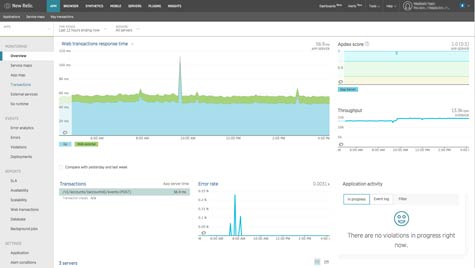
New-Relic-Golang

Organizations are not only embracing new languages, they are making use of both new and venerable programming languages to create polyglot applications. In those environments, having an APM tool that can support multiple languages becomes a foundational application management component.

It’s unlikely that any one programming language will become dominant. In fact, most programmers today are fluent in multiple programming languages and the rate at which new innovative programming languages are being created shows no signs of abating any time soon.

Save

Save

MV

Michael Vizard is a seasoned IT journalist, with nearly 30 years of experience writing and editing about enterprise IT issues. He is a contributor to publications including Programmableweb, IT Business Edge, CIOinsight and UBM Tech. He formerly was editorial director for Ziff-Davis Enterprise, where he launched the company’s custom content division, and has also served as editor in chief for CRN and InfoWorld. He also has held editorial positions at PC Week, Computerworld and Digital Review.

Recommended for you...

Python for Machine Learning: A Tutorial
Kihara Kimachia
Jun 20, 2022
Best Performance Testing Tools for 2022
Jenn Fulmer
Jun 14, 2022
Tips for Writing the Perfect Business Requirements Document
Jillian Koskie
May 24, 2022
IT Business Edge Logo

The go-to resource for IT professionals from all corners of the tech world looking for cutting edge technology solutions that solve their unique business challenges. We aim to help these professionals grow their knowledge base and authority in their field with the top news and trends in the technology space.

Property of TechnologyAdvice. © 2025 TechnologyAdvice. All Rights Reserved

Advertiser Disclosure: Some of the products that appear on this site are from companies from which TechnologyAdvice receives compensation. This compensation may impact how and where products appear on this site including, for example, the order in which they appear. TechnologyAdvice does not include all companies or all types of products available in the marketplace.