
SHARE
Facebook X Pinterest WhatsApp

Zoomdata Taps into Microservices for Data Visualization

Data Lakes: 8 Enterprise Data Management Requirements With the rise of microservices architectures and containers, not only are the ways applications are being built transforming, so too are their capabilities. One of the first examples of this transformation comes in the form of a data visualization and analytics application from Zoomdata. Version 2.2 of the […]

Written By
MV
Mike Vizard
May 11, 2016
Slide Show

Data Lakes: 8 Enterprise Data Management Requirements

With the rise of microservices architectures and containers, not only are the ways applications are being built transforming, so too are their capabilities. One of the first examples of this transformation comes in the form of a data visualization and analytics application from Zoomdata.

Version 2.2 of the company’s namesake data visualization application, released today, uses microservices and Docker containers to make it simpler for end users to interrogate large amounts of data and more easily connect with external data sources.

Zoomdata CEO Justin Langseth says that approach enabled Zoomdata to design a data visualization tool that natively interacts with Big Data sources such as Apache Spark using a microservices architecture that allows independent services to be combined as needed. Written in Java, Zoomdata takes advantage of Mesos to provide its application with a distributed kernel that enables each application session to dynamically scale up and down in terms of the amount of data being analyzed. That approach, adds Langseth, also provides a multi-tenancy capability and a framework for securing data based on its attributes.

Zoomdata also took advantage of containers to write an application programming interface that makes it simpler to use a software development kit to embed Zoomdata inside another application.
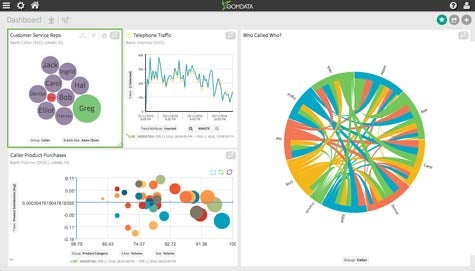
Caller-Dashboard

Langseth says Zoomdata expects that many organizations will take advantage of these capabilities to deploy a data visualization application on premise that has all the attributes of a software-as-a-service (SaaS) application without incurring any of the compliance issues associated with cloud applications.

It’ll be a little while longer before more applications employing microservices architectures become more widely available. But as they do, the end-user experience surrounding these applications will be like nothing that has gone before.

MV

Michael Vizard is a seasoned IT journalist, with nearly 30 years of experience writing and editing about enterprise IT issues. He is a contributor to publications including Programmableweb, IT Business Edge, CIOinsight and UBM Tech. He formerly was editorial director for Ziff-Davis Enterprise, where he launched the company’s custom content division, and has also served as editor in chief for CRN and InfoWorld. He also has held editorial positions at PC Week, Computerworld and Digital Review.

Recommended for you...

Top Data Lake Solutions for 2022
Aminu Abdullahi
Jul 19, 2022
Top ETL Tools 2022
Collins Ayuya
Jul 14, 2022
Snowflake vs. Databricks: Big Data Platform Comparison
Surajdeep Singh
Jul 14, 2022
Identify Where Your Information Is Vulnerable Using Data Flow Diagrams
Jillian Koskie
Jun 22, 2022
IT Business Edge Logo

The go-to resource for IT professionals from all corners of the tech world looking for cutting edge technology solutions that solve their unique business challenges. We aim to help these professionals grow their knowledge base and authority in their field with the top news and trends in the technology space.

Property of TechnologyAdvice. © 2025 TechnologyAdvice. All Rights Reserved

Advertiser Disclosure: Some of the products that appear on this site are from companies from which TechnologyAdvice receives compensation. This compensation may impact how and where products appear on this site including, for example, the order in which they appear. TechnologyAdvice does not include all companies or all types of products available in the marketplace.