

How Developers Balance Speed and Quality

As part of a concerted effort to couple its data warehouse more tightly with the SAP HANA in-memory database, SAP today unveiled an implementation of that data warehouse that only runs on HANA.
In the past, SAP has supported its data warehouse running on top of multiple databases. But with the launch today of SAP BW/4HANA, Neil McGovern, senior director of product marketing for SAP Data Warehousing, says SAP will no longer be supporting deployments of its data warehouse on what are now rival database platforms.
A big reason for this is that SAP BW/4HANA makes extensive use of algorithms that SAP is now embedding inside HANA to take advantage of faster DRAM and Flash storage technologies at a time when transaction processing and analytics are increasingly being processed together in real time. But employing those algorithms comes at the expense of application portability.
For performance reasons, it’s obvious why there are benefits to be gained by tightly coupling a data warehouse to a specific database platform running in memory. But IT organizations that make use of SAP HANA are clearly going to have to make some commitments to the level of depth they want to employ both SAP applications and databases.
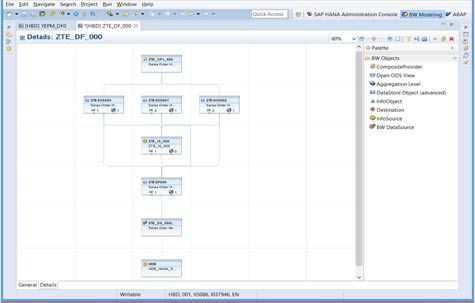
McGovern notes that with the rise of various data virtualization technologies, it’s now no longer necessary to pull data in and out of a specific data warehouse to analyze it. As such, McGovern says SAP BW/4HANA will still be able to analyze data residing in multiple repositories employing a data fabric architecture without having to move data between multiple databases. That simpler data fabric approach to analyzing data extends across both on-premises installations of the SAP data warehouse as well as instances running on the SAP public cloud and Amazon Web Services (AWS).
“Having to move data around really is the root of all evil in the enterprise,” says McGovern.
Nevertheless, given the long history of being able to employ data warehouses across multiple databases, that idea may take some getting used to for SAP data warehouse customers.
Save
Save