

5 Steps to Wrangle Uncontrolled Data Flow

In theory at least, the network is the perfect place to gather analytics about every aspect of the business because it touches everything. In practice, converting all those bits and bytes into actionable intelligence has been expensive and challenging to accomplish.
Aiming to reduce the complexity and cost of applying analytics at the networking level, Pluribus Networks this week unveiled an update to its network performance and monitoring software that makes use of a Big Data repository to keep track of network flows associated with any application all the way down to the packet level.
Mark Harris, vice president of marketing for Pluribus Networks, says the latest version of VCFcenter provides IT organizations with an analytics platform that can be tightly integrated with its software-defined networking (SDN) platform or deployed independently on top of an existing networking environment. In either case, Harris says the complexity and cost associated with deploying a network monitoring tool has been substantially reduced.
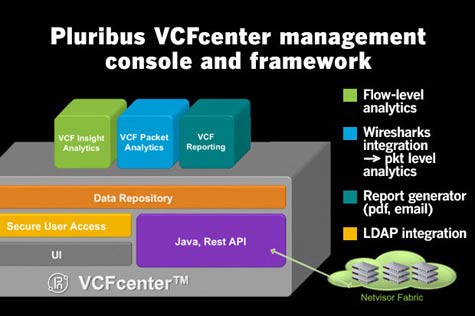
Obviously, Pluribus Networks is leveraging the network fabric it created to accomplish that goal. In fact, Harris says Pluribus Networks expects that many IT organizations will first deploy its monitoring tools to gain visibility into their existing environments before moving on to embrace an SDN platform. The big driver for that, says Harris, is the rise of microservices that will require IT organizations to better understand the metadata surrounding a microservice that, by definition, is randomly invoking multiple services across an enterprise network.
However IT organizations arrive at SDN, the one thing that’s clear is that the significance of that shift goes way beyond network agility. In many cases, IT organizations that embrace SDNs in the form of network overlays will for the first time be gaining visibility into network flows. So far, those network flows have, as far as any application is concerned, been too complex and expensive to unravel.
Save
Save
Save
Save
Save