
SHARE
Facebook X Pinterest WhatsApp

Informatica Brings Real-Time Integration to the Cloud

Data Center Applications and the Cloud: What You Need to Know With the release of the spring 2014 edition of Informatica Cloud, users will have access to graphical tools to directly design and map data integration flows between applications. According to Ajay Gandhi, vice president of product marketing for Informatica Cloud, the increased sophistication of […]

Written By
MV
Mike Vizard
Mar 4, 2014
Slide Show

Data Center Applications and the Cloud: What You Need to Know

With the release of the spring 2014 edition of Informatica Cloud, users will have access to graphical tools to directly design and map data integration flows between applications.

According to Ajay Gandhi, vice president of product marketing for Informatica Cloud, the increased sophistication of so-called “citizen integrators” is creating demand for data integration frameworks in the cloud that end users can directly manipulate without the aid of a developer.

The Informatica Cloud Spring 2014 is based on the Vibe virtual data machine technology developed by Informatica. Gandhi says that as Informatica gets better at abstracting away the complexity associated with data integration, end users become more comfortable with using rules defined in the Informatica Cloud to dynamically link data. Those various integrations can then be captured within the Informatica Cloud, which Gandhi says makes it possible to reuse them across other parts of the organization.
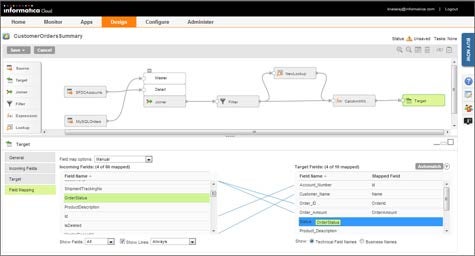
viz20140304-01

That doesn’t necessarily mean that programmers won’t be needed to optimize those data flows later on. But Gandhi says it does mean that the initial data integration process can take advantage of application programming interfaces (APIs) and the metadata captured by Informatica Cloud to allow end users to create their own real-time workflows across disparate sets of data.

Ultimately, Gandhi says the ability for end users to map data integration themselves without the aid of developers should lead to orders of magnitude in productivity gains. After all, business users typically know what data needs to constitute a workflow; it’s just the process associated with integrating those data sets that has been too labor intensive from a programming perspective to allow the workflows to be dynamically created.

MV

Michael Vizard is a seasoned IT journalist, with nearly 30 years of experience writing and editing about enterprise IT issues. He is a contributor to publications including Programmableweb, IT Business Edge, CIOinsight and UBM Tech. He formerly was editorial director for Ziff-Davis Enterprise, where he launched the company’s custom content division, and has also served as editor in chief for CRN and InfoWorld. He also has held editorial positions at PC Week, Computerworld and Digital Review.

Recommended for you...

Top ETL Tools 2022
Collins Ayuya
Jul 14, 2022
Snowflake vs. Databricks: Big Data Platform Comparison
Surajdeep Singh
Jul 14, 2022
Identify Where Your Information Is Vulnerable Using Data Flow Diagrams
Jillian Koskie
Jun 22, 2022
IT Business Edge Logo

The go-to resource for IT professionals from all corners of the tech world looking for cutting edge technology solutions that solve their unique business challenges. We aim to help these professionals grow their knowledge base and authority in their field with the top news and trends in the technology space.

Property of TechnologyAdvice. © 2025 TechnologyAdvice. All Rights Reserved

Advertiser Disclosure: Some of the products that appear on this site are from companies from which TechnologyAdvice receives compensation. This compensation may impact how and where products appear on this site including, for example, the order in which they appear. TechnologyAdvice does not include all companies or all types of products available in the marketplace.