

Top Resolutions for IT Teams in 2016

Much of the interest in NoSQL databases has stemmed from the simple fact that many organizations running the open source MySQL relational database are either running out of performance headroom or have concerns over Oracle’s stewardship of the project. The challenge they face is not only the cost of switching databases, but that the applications that sit on top of MySQL need to be rewritten.
To address that problem, Deep Information Sciences today unveiled an in-memory deepSQL database that is compatible with existing MySQL applications. Chad Jones, chief strategy officer for Deep Information Sciences, says deepSQL gives IT organizations that have invested in MySQL an upgrade path that enables them to not only increase application performance by several orders of magnitude, but also dynamically invoke additional compute resources as needed.
Originally, DeepSQL focused on building faster storage engines for the MySQL databases. But at the same time, Jones says the company has been taking advantage of its database expertise to push into the realm on in-memory computing.
Overall, Jones says deepSQL can increase complex query performance by a factor of two to seven times, while boosting data ingest up to 50 times, and the number of transactions processed by a factor of 64x across as many as 1.2 trillion rows of data. Jones says it reduces IOPS by as much as 80 percent and provides an 80 percent reduction in disk footprint.
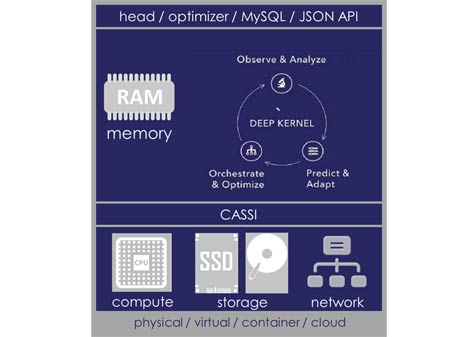
Jones also notes that because of the way deepSQL streams data to a remote file share, redundancy in backing up data is built into the core database architecture.
Capable of supporting both transaction and analytics workloads, Jones says deepSQL makes extensive use of machine learning algorithms to inform database administrators when they will need to bring additional compute and storage resources online. The result, says Jones, is an in-memory database that can scale up and down as workload requirements change.
IT organizations of all sizes have poured a significant amount of time and energy into MySQL. Right now, the only other MySQL alternative is the open source MariaDB project. Naturally, Oracle expects many of those organizations to upgrade to Oracle or Oracle NoSQL databases. But now that an in-memory database option capable of running those applications is available, that goal just got a little harder to achieve.