

The Hadoop Challenge for Business Intelligence and Analytics Users

The campaign to put Apache Hadoop at the center of the data universe in the enterprise got a little stronger this week with the release of Cloudera Enterprise 5.2, which increases security among its other improvements. The introduction of a Cloudera Director, a tool that makes it simpler to manage instances of Hadoop running in the cloud, also further bolsters the company’s stance with Hadoop.
In addition, Cloudera announced Impala 2.0, the latest version of a SQL database engine that runs directly on top of Hadoop and an essential component of Cloudera 5.2.
Clarke Patterson, senior director of product marketing for Cloudera, says that as IT organizations begin to manage multiple instances of Hadoop that exist inside and outside of the traditional enterprise, they will also need a framework that simplifies the management of those distributed hubs.
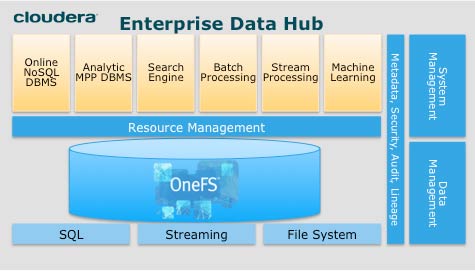
Meanwhile, Impala is designed to allow IT organizations to harness the power of those Hadoop instances using analytics applications that can query Hadoop using a standard SQL programming language that is the lingua franca for business.
Securing all that data is clearly also a major IT priority. To address that issue, Patterson says version 5.2 of Cloudera Enterprise incorporates new security features, including an encryption technology that Cloudera is adding support for via the Project Rhino initiative with Intel, which recently invested $740 million in Cloudera.
Cloudera is also working on Apache Sentry policy management software and HDFS encryption capabilities and will be adding support for technology from Gazzang, a provider of encryption and key management software that Cloudera acquired earlier this year. Finally, the company is creating a new Cloudera Navigator tool that simplifies auditing the Cloudera Enterprise environment.
As a major element of any data warehousing strategy going forward, it’s clear that as Hadoop continues to move to the center of the enterprise, IT organizations are going to need more sophisticated management tools to cope with the rapidly emerging Hadoop reality.