
SHARE
Facebook X Pinterest WhatsApp

Built.io Makes Available On-Premises Edition of iPaaS

Selecting a Cloud Service: 5 Questions to Ask Prospective Providers Several integration services capable of being invoked via the cloud have emerged over the past several years. Some of those services has been aimed at professional developers, while others are designed with end users who want to stitch applications together on their own in mind. […]

Written By
MV
Mike Vizard
Dec 19, 2016
Slide Show

Selecting a Cloud Service: 5 Questions to Ask Prospective Providers

Several integration services capable of being invoked via the cloud have emerged over the past several years. Some of those services has been aimed at professional developers, while others are designed with end users who want to stitch applications together on their own in mind. Now, one of the pioneers of the latter capability is moving to make its core software available on-premises as well as in the cloud.

Built.io today announced Built.io Flow On-Prem, an edition of its integration platform-as-a-service (iPaaS) software that IT organizations can opt to deploy on their own local data centers. Built.io COO Matthew Baier says that while Built.io expects most of the demand for its integration service to continue to be for the cloud service, demand for an iPaaS capability deployed locally is starting to grow.

“There’s enough demand in regulated industries that won’t consider the cloud to justify supporting an on-premises edition,” says Baier.
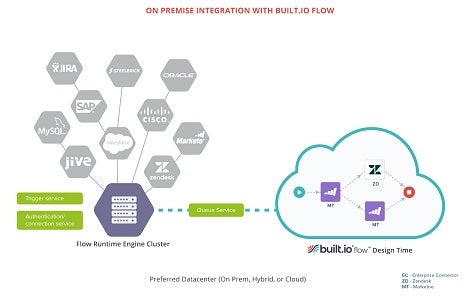
Builtioflow

In the immediate future, Baier says, Built.io expects its cloud services and on-premises edition to be used in isolation from one another by different customers. But it is possible, in time, that many customers will opt to pursue a federated approach to integration inside and out of the cloud.

In the meantime, it’s interesting to note the level of interest for a local edition of an iPaaS aimed primarily aimed at end users inside the enterprise. That would suggest the whole “citizen integrator” phenomenon is finally forcing IT organizations, whether they like it or not, to think about application integration in a way that doesn’t require them to be nearly as intimately involved as they have historically been. It may take some time for IT cultures to adjust to that new reality. But in terms of overall productivity, it should be a positive development for all concerned.


Save

MV

Michael Vizard is a seasoned IT journalist, with nearly 30 years of experience writing and editing about enterprise IT issues. He is a contributor to publications including Programmableweb, IT Business Edge, CIOinsight and UBM Tech. He formerly was editorial director for Ziff-Davis Enterprise, where he launched the company’s custom content division, and has also served as editor in chief for CRN and InfoWorld. He also has held editorial positions at PC Week, Computerworld and Digital Review.

Recommended for you...

Top ETL Tools 2022
Collins Ayuya
Jul 14, 2022
Snowflake vs. Databricks: Big Data Platform Comparison
Surajdeep Singh
Jul 14, 2022
Identify Where Your Information Is Vulnerable Using Data Flow Diagrams
Jillian Koskie
Jun 22, 2022
IT Business Edge Logo

The go-to resource for IT professionals from all corners of the tech world looking for cutting edge technology solutions that solve their unique business challenges. We aim to help these professionals grow their knowledge base and authority in their field with the top news and trends in the technology space.

Property of TechnologyAdvice. © 2025 TechnologyAdvice. All Rights Reserved

Advertiser Disclosure: Some of the products that appear on this site are from companies from which TechnologyAdvice receives compensation. This compensation may impact how and where products appear on this site including, for example, the order in which they appear. TechnologyAdvice does not include all companies or all types of products available in the marketplace.