


Hyperconverged Infrastructure (HCI) represents one of the most significant shifts in data center hardware since the rack server (mostly) displaced the mainframe. Relying on integrated compute-storage-networking modules and offering rapid scalability, HCI has the potential to dramatically alter the IT landscape over the next decade. But while HCI is certainly innovative in design, its true measure lies in the practical benefits it brings to data center management and operations. Here then are 10 ways in which the enterprise stands to benefit from HCI.

10 Reasons Why the Enterprise Is Turning to Hyperconverged Infrastructure
While HCI is certainly innovative in design, its true measure lies in the practical benefits it brings to data center management and operations.
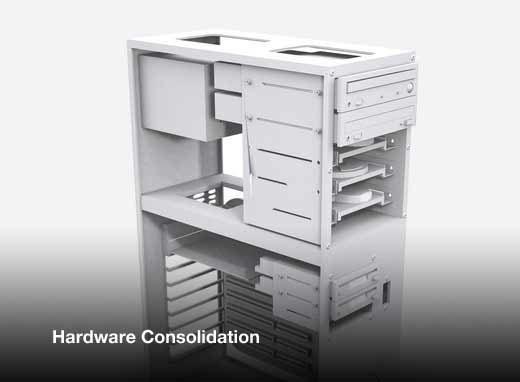
Hardware Consolidation
While the overriding meme for HCI is that it provides greater scale, the real benefit is that it enables highly dense infrastructure footprints. This will help the enterprise shed the ad hoc data centers of today in favor of sleeker, more compact systems that provide high levels of performance in very confined spaces.

More Efficient Resource Consumption
HCI, plus related cloud resources, allows organizations to make resources available to a greater number of users within and outside the enterprise. Using high-speed storage and integrated fabric technologies, HCI is able to pool and distribute resources on a much more dynamic basis than legacy infrastructure.

Service-Level Objectives/Business Outcomes
HCI allows businesses to streamline service delivery to customers and drive efficiencies in product and application development cycles. This in turn provides a greater ability to accommodate individual user needs and target niche markets.

Platform Integration
Because HCI will most likely be built on commodity hardware, enterprises have a greater ability to integrate numerous data platforms and virtual architectures than in the past. Not that these systems will necessarily work together seamlessly, but they will no longer require their own hardware to provide effective service.
SDDC
As a greenfield deployment, HCI is much more amenable to software-defined data center (SDDC) constructs than legacy hardware. In fact, most HCI deployments to date are being purpose-built around highly abstract data ecosystems.

Composable Infrastructure
By deploying HCI as the underpinnings of fully virtualized infrastructure, organizations make it easier to manage that infrastructure as services to be mixed and matched rather than systems linked inexorably to hardware. As new HCI modules are plugged into the environment, they can join the federated pool of resources without the lengthy, complicated provisioning and integration tasks of current infrastructure.

Private/Hybrid Clouds
Organizations are quickly coming to realize that cloud computing is not conducive to legacy infrastructure or applications. HCI is the quickest and easiest way to put an optimized, scalable hardware layer in place for the growing legion of cloud-native services and microservices.

Artificial Intelligence
This same dynamic applies to AI technologies like machine learning, neural networks and speech recognition. These technologies require massive computing capabilities that are prohibitively expensive to deploy in a conventional sense but can be managed with hyperconverged infrastructure.

Automation
Even intelligent automation has difficulty navigating random collections of hardware and software. HCI places a premium on uniformity, which makes it easier to automate processes to perform the same functions the same way.

Cost Control
At the heart of all of these developments is the need to achieve greater scale and higher levels of performance without blowing the IT budget completely out of whack. In terms of cost per GB, Gbps, compute cycle or time spent on management and configuration, HCI provides a better ROI than traditional infrastructure.