Moving to the Public Cloud: Six Steps for Success

As IT operations teams begin to exercise more control over public cloud services, the technologies that provide a foundation for establishing a distributed control plane are starting to gain traction. With that issue in mind, Lagrange Systems announced this week that its CloudMaestro application delivery controller (ADC) is now integrated with Google Cloud.
Delivered as a software-as-a-service (SaaS) application that IT organizations invoke rather than have to deploy, CloudMaestro already supports Amazon Web Services, Microsoft Azure, IBM Softlayer, Verizon, HP Cloud and Rackspace among other cloud service providers.
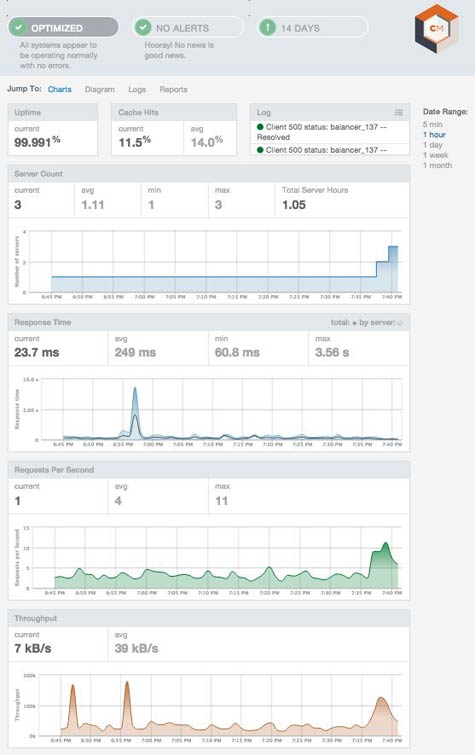
Lagrange Systems CEO Sonal Puri says CloudMaestro provides an ADC that enables IT organizations to more easily spin up and, just as importantly, spin down cloud resources on demand. All too often, developers will spin up virtual machines in the cloud, but forget to turn them off when they are no longer being used. An ADC in the cloud provides a mechanism through which to provide better oversight and control over the application workloads that are invoking those cloud resources, says Puri.
While developers generally make use of load balancing software in the cloud, Puri notes that ADCs provide a more granular level of control across multiple applications. By having access to ADC technology as a SaaS application, IT organizations can invoke the capability in a matter of minutes and take advantage of predictive analytics that generate alerts when, for example, that allotted amount of capacity for any given workload is about to be exceeded.
Naturally, competition across the ADC space is fierce. But Puri says it’s unlikely that IT organizations will want to deploy the same ADC technology originally designed for the data center in the cloud. Having to physically deploy an ADC essentially eliminates all the agility enabled by the cloud service in the first place, says Puri.
Though IT operations teams are figuring out how to manage application workloads in the cloud, it doesn’t necessarily follow that IT organizations will accomplish that goal using the same technologies and management frameworks they use on premise to master external cloud services.