

5 Ways to Boost Productivity with Content Automation

When it comes to the intersection of business processes and IT, there’s a lot more mystery than most IT professionals care to admit. The typical business process usually spans a broad range of applications running across a variety of distributed IT systems. Keeping track of how any given business process evolves over time in any given IT environment is exceedingly challenging for most organizations.
At the SAP TechEd 2016 conference today, Worksoft unveiled an extension to its analytics overlay for SAP environments that automates the business process discovery process. Instead of having to detail a small army of business analysts to manually identify what applications any given process touches, Worksoft CTO Shoeb Javed says, it’s now much simpler to discover all the systems involved in an order-to-cash process in an SAP environment.
Over an extended period of time, Javed says, it’s not uncommon for businesses to have little clarity surrounding many of the core business processes they rely on.
“There really isn’t a good understanding of what occurs on an end-to-end basis,” says Javed.
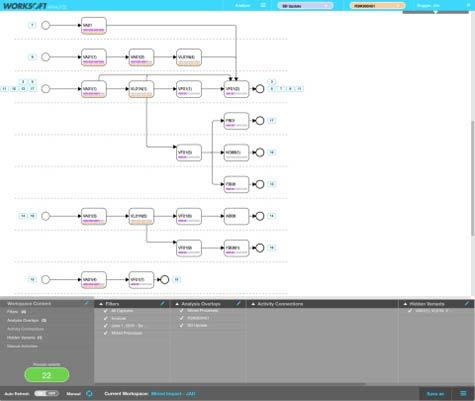
Worksoft is designed to capture all the end-user interactions occurring across that process and then generate a visual map of what’s taking place within the SAP environment. IT organizations, says Javed, can then use that information to make a case for redesigning a business process or eliminating it altogether if it turns out it’s not being widely employed.
Far too often, IT organizations find themselves at the mercy of complicated business processes that have far outlived their usefulness. The good news is that, thanks to the rise of digital business transformation, there’s more willingness to re-engineer those processes than ever. But before any of that work can really begin, the IT organization needs to be able to identify the current state of an existing business process in order to be certain that no part of that process winds up getting overlooked.
Save
Save
Save