
SHARE
Facebook X Pinterest WhatsApp

Salesforce Extends Reach and Scope of APIs

Automating the Intelligence of Business Intelligence There’s no doubt at this point that open application programming interfaces (APIs) are rapidly transforming the end-user experience inside and out of the cloud. The traditional walls that have existed between applications are becoming more porous, making it simpler to share data between applications. Arguably, it will be the […]

Written By
MV
Mike Vizard
Dec 3, 2015
Slide Show

Automating the Intelligence of Business Intelligence

There’s no doubt at this point that open application programming interfaces (APIs) are rapidly transforming the end-user experience inside and out of the cloud. The traditional walls that have existed between applications are becoming more porous, making it simpler to share data between applications. Arguably, it will be the application providers that do the best job of leveraging APIs to improve the end-user experience in order to achieve the highest levels of affinity and utilization within enterprise environments.

With that issue in mind, Salesforce today extended the capabilities of its APIs by adding the ability to read, update and delete records in external data sources. Salesforce is also making it simpler to connect to multiple classes of APIs as well as logically connect multiple data sources together to create a unified workflow across multiple applications.

Jim Sinai, senior director of platform product marketing for Salesforce, says the reality within most application environments these days is that end users are creating workflows by manually cutting and pasting data between applications. Formerly known as Salesforce Lightning Connect, Sinai says Salesforce Connect is designed to let everyone from “citizen integrators” to professional developers integrate third-party data with records that make up the Salesforce application environment.
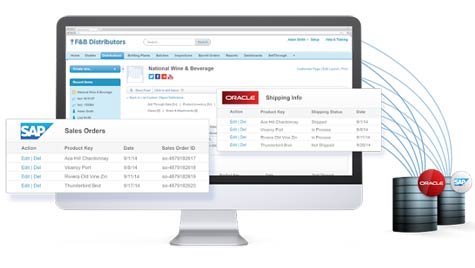
SalesforceConnect

Salesforce Connect is specifically designed to make it possible to connect to external data sources. IT organizations still need to rely on third-party tools to make it possible for external applications to consume Salesforce data.

Naturally, not everyone may appreciate the sophistication of the underlying architecture that enables APIs to more seamless pull data into Salesforce. But most end users will undoubtedly appreciate that capability in the hour of their next data integration need.

MV

Michael Vizard is a seasoned IT journalist, with nearly 30 years of experience writing and editing about enterprise IT issues. He is a contributor to publications including Programmableweb, IT Business Edge, CIOinsight and UBM Tech. He formerly was editorial director for Ziff-Davis Enterprise, where he launched the company’s custom content division, and has also served as editor in chief for CRN and InfoWorld. He also has held editorial positions at PC Week, Computerworld and Digital Review.

Recommended for you...

Observability: Why It’s a Red Hot Tech Term
Tom Taulli
Jul 19, 2022
Top GRC Platforms & Tools in 2022
Jira vs. ServiceNow: Features, Pricing, and Comparison
Surajdeep Singh
Jun 17, 2022
IT Business Edge Logo

The go-to resource for IT professionals from all corners of the tech world looking for cutting edge technology solutions that solve their unique business challenges. We aim to help these professionals grow their knowledge base and authority in their field with the top news and trends in the technology space.

Property of TechnologyAdvice. © 2025 TechnologyAdvice. All Rights Reserved

Advertiser Disclosure: Some of the products that appear on this site are from companies from which TechnologyAdvice receives compensation. This compensation may impact how and where products appear on this site including, for example, the order in which they appear. TechnologyAdvice does not include all companies or all types of products available in the marketplace.