

How to Use the Cloud to Become a High-Velocity Business

Application delivery controllers (ADC), also known as load balancers, have been around in one form or another for some time now. The choice IT organizations have usually had to make is to decide whether to deploy an ADC locally or in the cloud. A10 Networks is aiming to fundamentally change the ADC deployment decision altogether by making ADC functionality available as a software-as-a-service (SaaS) application.
Kamal Anand, general manager for the cloud division at A10 Networks, says A10 Lightning is the first in a series of application delivery services that A10 Networks plans to deliver via the cloud that is fundamentally changing the way ADC functions are made available. Instead of deploying an ADC in a way that multiple applications share, each application can now invoke an ADC controller, via REST application programming interfaces (APIs), that is dedicated to it via a multi-tenant application, says Anand.
“We’re moving to a model where infrastructure is made available on a per-app basis,” says Anand.
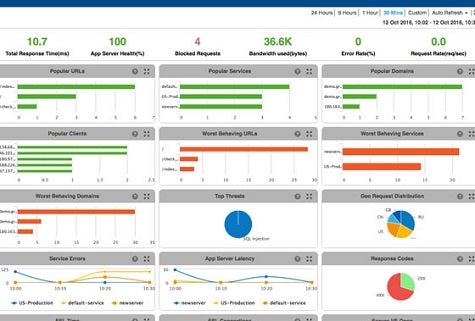
Anand says A10 Lightning itself makes use of Docker containers and microservices to make it feasible to deliver ADC functionality as a service, allowing an IT organization to flexibly address workloads wherever they happen to be running at any given moment in time.
Historically, DC options came down to either deploying a physical or virtual appliance. The choice of those two options was usually dictated by performance requirements and whether the ADC needed to be deployed on a public cloud. Anand says now that SDC controller functionality can be made available using a SaaS model, IT organizations don’t have to spend any time deploying and managing ADCs. The result is a much more agile IT environment that enables IT organizations to better embrace DevOps principles, says Anand.
It’s unclear just how much network functionality will soon be moving into the cloud. Obviously, a broad swath of network services are dependent on controllers that can be invoked as a service. The real issue that IT organizations need to come to terms with is just how much they want to centralize network management functions in the cloud versus continuing to manually deploy controllers across an IT environment that gets more distributed with each passing day.
Save