


 When it comes to consolidating enterprise applications, it turns out the biggest impediments to change are the business users themselves.
According to a new study of 206 IT decision makers in the U.S. from Forrester Consulting that was commissioned on behalf of Hewlett-Packard, the two major reasons that many IT organizations cite for their failure to consolidate existing applications are the fact that business users insist that they keep the older applications, followed closely by the fact that many of them are too busy developing new applications to spend the time needed to eliminate old ones. (Be sure to read our Mike Vizard’s full post on the study.)
This inability to retire obsolete applications not only increases costs — the study finds that supporting all those legacy applications drains IT productivity. In addition, all those legacy application require outdated IT infrastructure that is usually more expensive to maintain and run.
The good news is that the study finds that structured approaches to software development lifecycle (SDLC) are taking hold. But unless IT organizations can have a frank conversation with the business about how data can be effectively transferred from legacy applications to new more cost-effective applications, the process of modernizing IT systems slows to a crawl while costs continue to rise.

Click through to learn more about Forrester’s research into application lifecycles — and how to fix them.
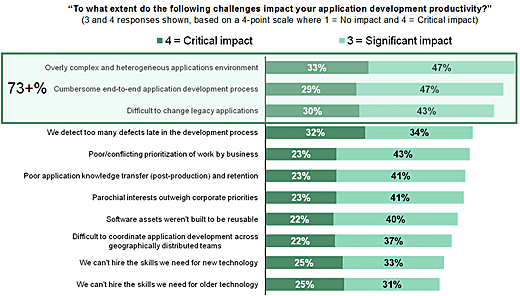
Many IT organizations simply can’t cope with the size of their application base.
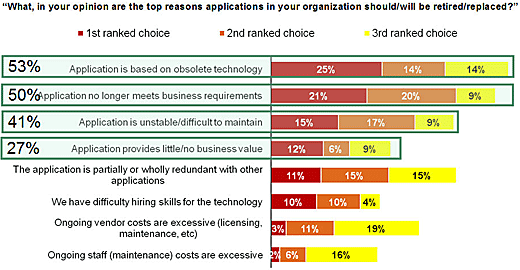
Old infrastructure and outdated applications drag the business down.
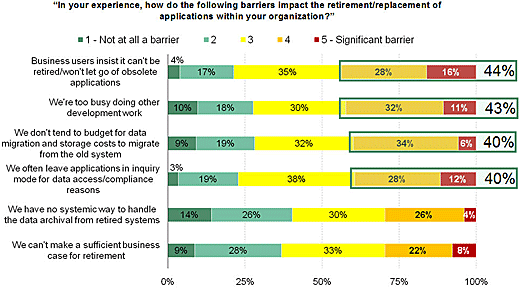
Business units are too attached to existing applications.
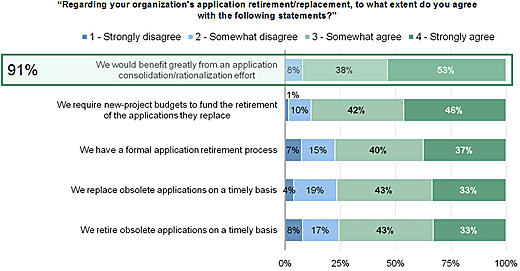
But not many have a consistent approach to the process.
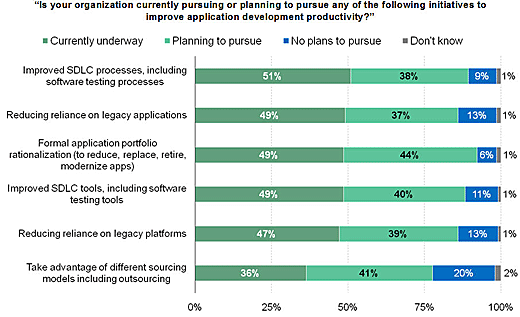
More emphasis being placed on software development lifecycle.
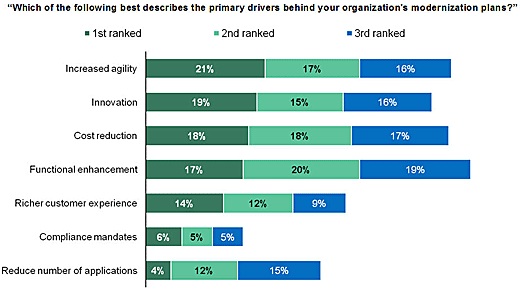
Adding business flexibility edges out cost reduction.
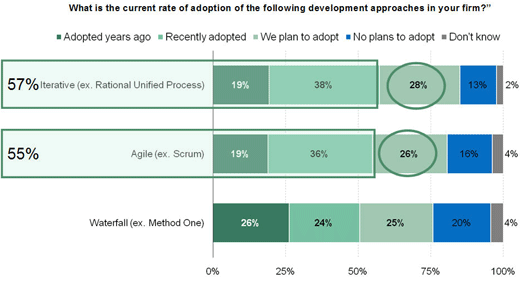
But different types of projects still require waterfall methodology.
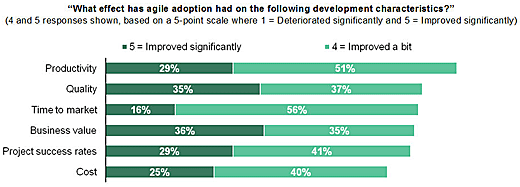
Business value and increased quality are primary drivers.
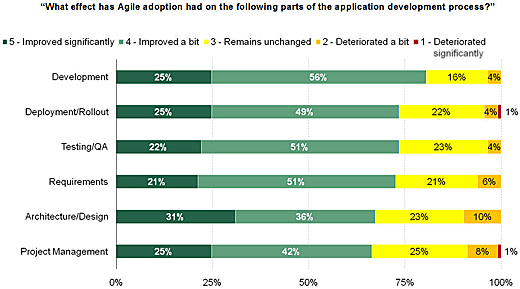
Design and development are the place seeing the most impact.
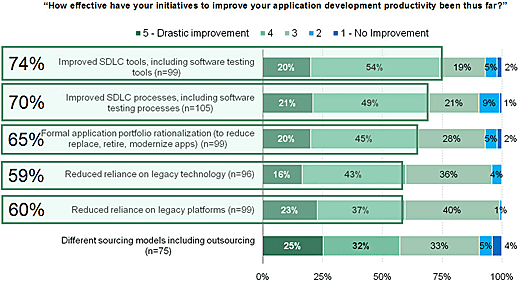
More companies seeing improvements in overall process.