


 Storage systems are going through a rapid period of innovation that probably exceeds anything that IT organizations have seen in the last 10 years. The primary reason for this is that the rise of virtualization coupled with the advent of low-cost Flash memory is creating a recipe for storage change.
In fact, in a new survey of 255 IT decision makers, conducted by IBOPE Zogby International on behalf of IBM, over half the respondents said they expect to develop a new storage strategy to deal with the growth of data in their organization. A large number of the respondents cited the rise of Big Data as one of the primary factors driving the need for a new storage strategy, which many of the respondents said is likely to include solid-state disk drives (SSDs) based on Flash memory.
According to Steve Wojtowecz, IBM vice president of storage software development, what’s most surprising about all this is the number of people who are already moving to make SSDs a standard part of the enterprise storage landscape. Wojtowecz says this suggests that IT organizations are struggling to cope with increased amounts of unstructured data that businesses want to analyze as part of a strategic Big Data project. The problem, adds Wojtowecz, is that existing storage systems are not up to the task of processing all that information at sufficient speeds.
What this ultimately means is that a new tier of “Level Zero” storage is being introduced into the enterprise that relies on inexpensive Flash memory technology. Of course, there’s a lot of research currently being conducted around various forms of memory, so it remains to be seen how many different types of memory technologies will find their way into the enterprise in the years ahead.
In the meantime, it’s pretty apparent that many IT organizations are going to have to rethink how they manage data because multiple applications sharing the same server are going to require new ways to maintain or improve existing levels of application performance.
Click through for a survey on SSD adoption, conducted by IBOPE Zogby International on behalf of IBM
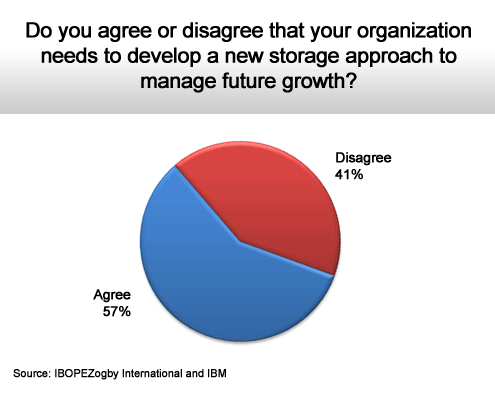
Realization starts to set in.
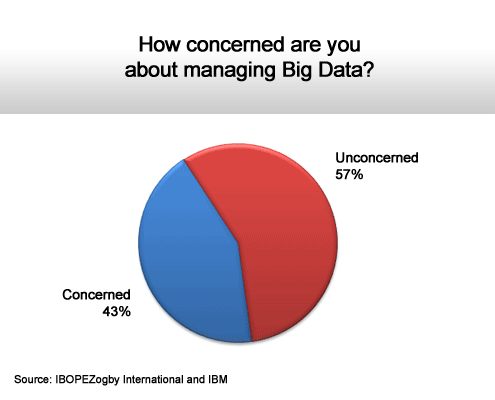
It’s becoming an issue.
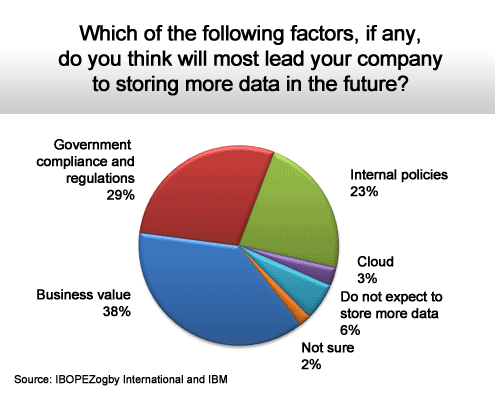
It’s a combination.
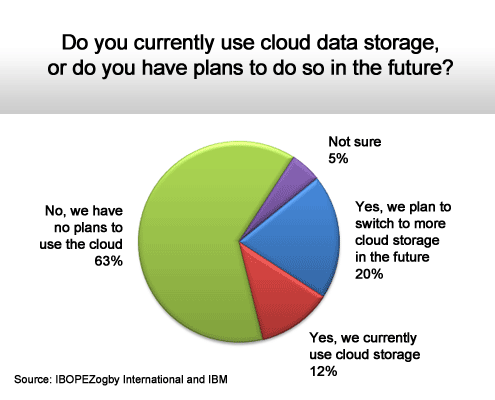
On premise still dominates, but cloud is growing.
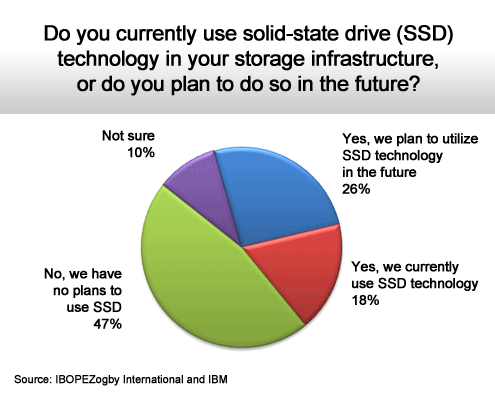
Fairly far along, given maturity of technology.
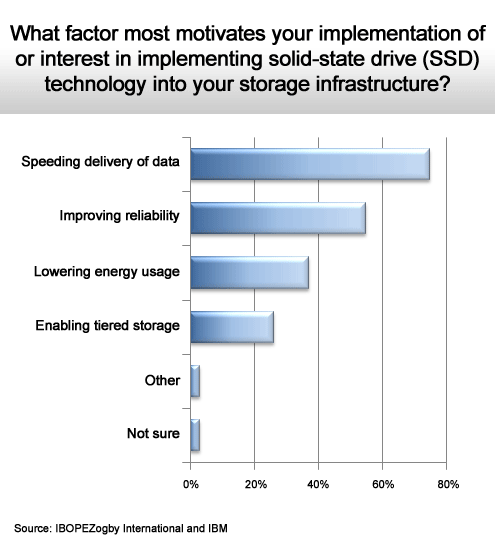
A need for speed.
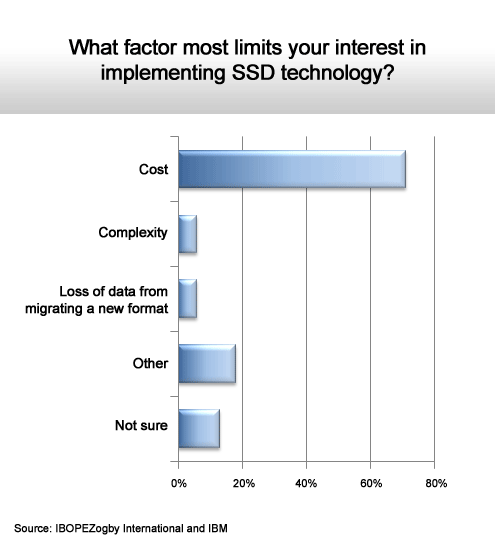
SSDs are still comparatively expensive.
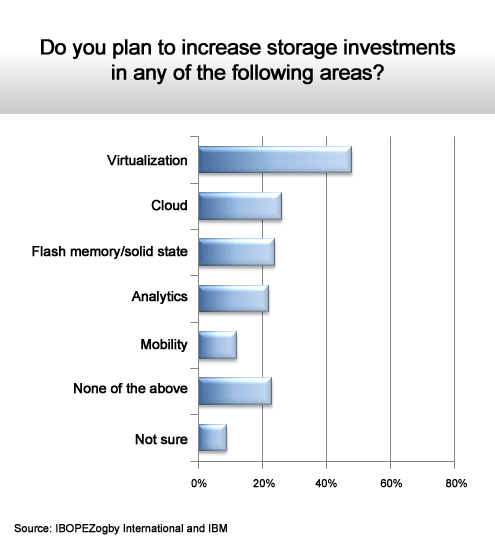
Virtualization is the driving force.