

Storage vs. Backup: What Your Business Needs to Know

One of the things that bedevils IT organizations most is that the more applications they add to their environment, the greater the contention there is for a limited number of I/O storage resources.
To address that issue, ioFABRIC today unveiled ioFABRIC Vicinity, software that automates much of the management of I/O performance by allowing IT administrators to assign specific quality of service (QoS) levels to specific applications.
Instead of letting every application contend equally for I/O resources, ioFABRIC CEO Steven Lamb says ioFABRIC Vicinity allows IT administrators to define performance levels for specific applications. ioFABRIC Vicinity then automatically optimizes the available storage resources to make sure those I/O performance commitments are met.
While similar automation capabilities have been available in high-end storage systems, Lamb says ioFABRIC Vicinity is designed to bring that same level of policy-based storage automation to commodity storage systems typically found in x86 server environments.
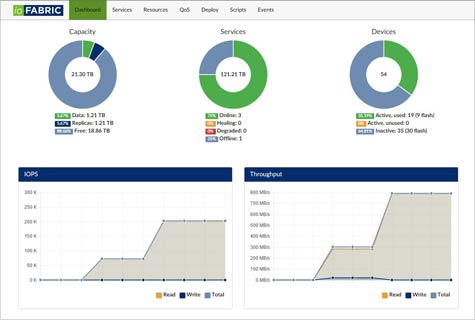
Specifically, Lamb says ioFABRIC places active data on high-performance media, including DRAM and Flash storage, for faster access. It also discovers storage media in the infrastructure and continually monitors for application workload suitability.
Deployable on a Linux server, Lamb notes that for all intents and purposes, ioFABRIC also eliminates manual storage provisioning data migration chores that consume a lot of administrator time and effort, while at the same time providing data protection capabilities such as dynamic replicas, snapshots, and the ability for storage systems to become self-healing in the event of, for example, a drive failure.
Naturally, many storage administrators who pride themselves on their ability to manually optimize storage performance will greet tools that automate storage performance management with a certain amount of skepticism. But from an IT organizational perspective, any tool that automates that task as much as possible means those same storage administrators are now available to take on more challenging tasks that go well beyond the comparatively simple usage of an algorithm to automate.