When it comes to data storage, these are clearly the best and worst of times.
On the positive side, there has never been more diversity in data storage technologies, and the cost per terabyte of storage has never been lower.
But with choice comes complexity. And as the amount of data that needs to be managed continues to grow exponentially, the amount of money spent on storage is one of the largest segments of the IT budget.
As IT executives ponder this storage conundrum, many of them are making plans to embrace new storage technologies that help reduce storage costs by embracing advanced compression algorithms while at the same time improving overall performance. In fact, unless a new data storage technology reduces both the size of the enterprise storage footprint, while improving performance, it’s going to be a tough sell in these challenging economic times.
To help IT organizations make the transition to new data storage technologies, Ralph Hennen, managing director for product development for SANpulse Technologies, a provider of data center migration tools, has come up with a list of 10 steps that IT organizations should take in order to insure success when migrating to any new storage architecture.
In general, Hennen advocates taking a cautious approach to emerging data storage technologies that emphasize staying close to the major vendors in the space. From Hennen’s perspective, IT organizations should be migrating to leading edge technologies with a lot of assistance from vendors, versus embracing bleeding edge technologies that have not yet stood the test of storage time.
At the same time, Hennen notes that with the advent of virtualization and emergence of trends such as “Big Data,” major changes are coming to enterprise storage that will be driven by new performance characteristics associated with these types of application environments.
Inevitably, Hennen says those changes will require IT organizations to embrace more storage automation in order to effectively tier storage requirements because even as the underlying technologies advance, the amount of data to be managed is still far outpacing the ability of any one IT organization to keep up, especially at a time when companies want to redeploy IT people to help re-engineer processes versus babysit storage arrays.
For more details on the SANpulse migration strategy, check out “10 Steps To Ensure Smooth Transition To New Storage Devices And Achieve Optimal Performance, Utilization And Cost-Savings.”

Click through for 10 tips to smooth your transition to a new storage platform.

Make sure to describe project objectives in terms of schedules, resource use and outcomes. Define the measures of success.
Clarify who owns the project, who can allocate resources, and who can resolve disputes, and define the process you want to follow when you discover a team or department can’t meet its commitments.

Inventory lists can be off significantly, so you’ll need to conduct extensive discovery to make sure you’ve got the ‘real’ list from which to assign priorities.
Ideally, you’ve already done lab testing on your new equipment before you purchased it. If not, do it now.
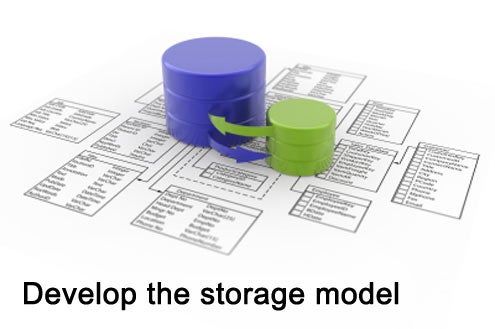
You’ll need to develop a specific storage model or mapping scheme. Comprehensive storage migration is just not as easy as a straight copy.
Determine which devices you need to maintain with your new storage platform and then check manufacturers’ support lists to determine working combinations. Ask your vendor for a remediation matrix in a usable software format.

During the actual data migration, avoid log jams by clarifying task ownership and project processes.

Throughout the migration process, track what has changed or is changing – what’s been consolidated, or moved, and what metrics are different.

Now that you’ve completed the migration to your new platform, assure that what you wanted to transform was transformed.

Now is the time to honestly evaluate what went right, what went wrong, and what needs to be changed.