SHARE
Facebook X Pinterest WhatsApp

HDS Enables End Users to Recover Files on Their Own

Now that cybercriminals have made it painfully obvious that employees are the weakest link when it comes to IT security, a lot more attention is starting to be paid to being able to recover data in the event of, for example, a ransomware attack. With that goal in mind, Hitachi Data Systems (HDS) has updated […]

Written By
MV
Mike Vizard
May 23, 2017

Now that cybercriminals have made it painfully obvious that employees are the weakest link when it comes to IT security, a lot more attention is starting to be paid to being able to recover data in the event of, for example, a ransomware attack.

With that goal in mind, Hitachi Data Systems (HDS) has updated Hitachi Content Platform (HCP) Anywhere file synchronization software in a way that makes it simpler for end users to recover previous versions of files. Jeff Lundberg, senior product marketing manager for HCP, says the latest HCP Anywhere makes it simpler for end users via a self-service module HDS makes available to recover multiple files based on a point in time rather than having to individually recover each file.

Designed to work in conjunction with network attached storage (NAS) systems from HDS, Lundberg says HCP doesn’t require any assistance from an internal IT organization to recover files locally or via a cloud gateway that HDS makes available.

“An end user can now recover a file with no IT intervention needed,” says Lundberg.

Other new additions to HCP include the ability to employ HCP within thin desktops and virtual desktop infrastructure (VDI) deployments, enhanced support for Microsoft Active Directory (AD), a new user interface and a REST application programming interface and Java software development kit (SDK).
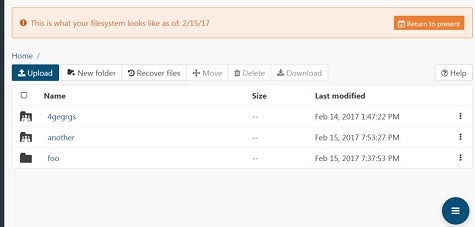
HCPA

Given the rising prevalence of ransomware, IT organizations have been scrambling to address data protection issues that in many cases have long been ignored. The challenge they face is that most ransomware gets introduced into an environment via phishing attacks that IT departments can do little to prevent. But given the fact that it’s usually an end user that inadvertently downloaded the code that enabled the ransomware in the first place, there should be some comfort in the fact that those same end users can now clean up their own mess.

MV

Michael Vizard is a seasoned IT journalist, with nearly 30 years of experience writing and editing about enterprise IT issues. He is a contributor to publications including Programmableweb, IT Business Edge, CIOinsight and UBM Tech. He formerly was editorial director for Ziff-Davis Enterprise, where he launched the company’s custom content division, and has also served as editor in chief for CRN and InfoWorld. He also has held editorial positions at PC Week, Computerworld and Digital Review.

Recommended for you...

Unifying Data Management with Data Fabrics
Litton Power
Jun 17, 2022
Top Big Data Storage Tools 2022
Surajdeep Singh
Jun 16, 2022
8 Top Data Startups
Tom Taulli
May 20, 2022
IT Business Edge Logo

The go-to resource for IT professionals from all corners of the tech world looking for cutting edge technology solutions that solve their unique business challenges. We aim to help these professionals grow their knowledge base and authority in their field with the top news and trends in the technology space.

Property of TechnologyAdvice. © 2025 TechnologyAdvice. All Rights Reserved

Advertiser Disclosure: Some of the products that appear on this site are from companies from which TechnologyAdvice receives compensation. This compensation may impact how and where products appear on this site including, for example, the order in which they appear. TechnologyAdvice does not include all companies or all types of products available in the marketplace.