


Just one in three emails within business inboxes hold real, immediate value, according to research released recently by Mimecast, a leading supplier of cloud-based email archiving, security and continuity for Microsoft Exchange and Office 365. Only 25 percent of email is considered essential for work purposes with an additional 14 percent categorized as being of ‘critical importance’.
The research, Mimecast’s inaugural “The Shape of Email” report, polled IT departments on email practices and the contents of the average employee inbox in order to develop a picture of the current status and value of business email. The research explores the changing nature of the inbox, remote access to email and the use of social media.
Click through for results from a survey examining email inboxes, conducted by Mimecast.
Nearly two out of every three (61 percent) emails received are considered to be non-essential.
- On average, 11 percent of email is personal, non-work related. The remaining content is functional at best, with an estimated seven percent of emails inside the average inbox considered to be spam or junk
- On average, 63 percent of email comprises internal, employee-to-employee communication
By looking at inbox content on a spectrum of value from junk to critically important information, the research assigned an average value to different types of inbox.
- Higher quality inboxes are notably smaller than those of lower quality – by an average of 10 percent (2.53 GB, compared to 2.81 GB, respectively). They are also likely to contain a higher proportion of internal mail
- The research finds that larger businesses with smaller inbox sizes are more likely to have higher levels of essential or critical emails
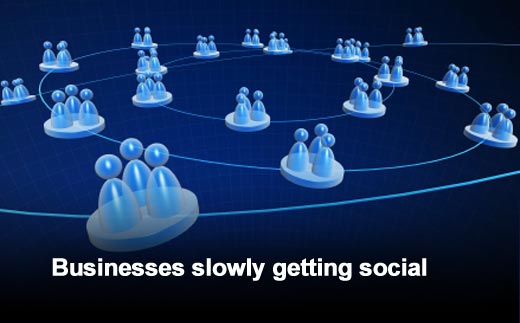
Organizations now commonly allow the use of social media in the workplace. LinkedIn is the most commonly used (in 55 percent of businesses), followed by Facebook (47 percent).
- However, only one in three organizations believes that the use of social media in the workplace has genuinely decreased reliance on email, with the impact of social media on email usage limited by security concerns
- 59 percent of respondents believe that current levels of social media activity increase the risk of information leaks and 55 percent believe the risk of security breaches is also increased
The changing nature of employee email usage has the potential to greatly impact the security of the information.
- IT departments are concerned about the security implications of mobile email and remote access to emails (39 percent and 41 percent respectively cite it as a concern)
- However, organizations are still more concerned about email-based viruses (55 percent) and email security breaches in general (55 percent)