

Five Common Excuses for Avoiding Windows Migrations

While server virtualization is now standard fare, the use of virtualization on the desktop remains nominal. Looking to change that equation, VMware today released VMware Horizon 6, a new version of its desktop virtualization software that makes it simpler to manage desktops and applications.
Viewing virtual instances of desktops that run on a server makes it easier—in theory—to manage those desktops, but setting up and managing a virtual desktop environment is a far more complex endeavor.
Courtney Burry, director of product marketing for end-user computing at VMware, says VMware Horizon 6 addresses those issue by adding a cloud-loop management system via a single console alongside an array of IT automation tools optimized for VMware desktop virtualization environments.
In addition, with this release VMware is also addressing performance issues with tighter integration between Horizon 6 and recently released VMware Virtual SAN software.
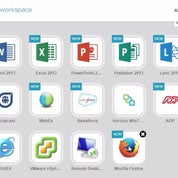 Finally, Horizon 6 also includes a new workspace through which end users can centrally access all their applications.
Taken together, Burry says the new features that are incorporated into Horizon 6 will significantly drive down the cost of desktop virtualization, which she notes that, by definition, is a more secure approach to delivering desktop applications that meets or exceeds most compliance requirements.
Obviously, providers of desktop virtualization software see the retirement of Windows XP as an opportunity to make the case for centralizing the management of Windows 7 and Windows 8 desktops. But the complexity of setting up those environments has made desktop virtualization—delivered by internal IT or a third-party desktop-as-a-service (DaaS) provider running Windows desktops or another operating system—an option that has not yet been pursued by many IT organizations.
Whether that trend continues to hold true remains to be seen, but clearly, the first step toward taking desktop virtualization mainstream should be providing IT organizations a better IT management experience.