SHARE
Facebook X Pinterest WhatsApp

Seagate Unveils SSDs to Help Drive Server Consolidation

At the Flash Memory Summit 2017 conference, Seagate today announced it is adding more NVMe and SAS solid-state drives (SSD) to its portfolio in addition to demonstrating a 64TB NVMe card configured with SSDs that can access data 13GB per second. Kent Smith, senior director of product marketing for Seagate, says the 2TB Nytro 5000 […]

Written By
MV
Mike Vizard
Aug 8, 2017

At the Flash Memory Summit 2017 conference, Seagate today announced it is adding more NVMe and SAS solid-state drives (SSD) to its portfolio in addition to demonstrating a 64TB NVMe card configured with SSDs that can access data 13GB per second.

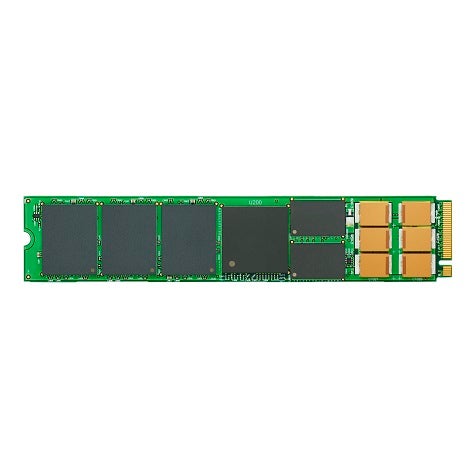
Kent Smith, senior director of product marketing for Seagate, says the 2TB Nytro 5000 NVMe M.2 SSD can support up to 67,000 IOPs for random writes, while a 15TB Nytro 3000 SAS SSD can provide up 2,200 megabytes per second (MB/s) in sequential read performance through a 12-gigabits per second (Gb/S) SAS dual or wide port interface.

Smith says, for the moment at least, most organizations are still connecting SSDs to SAS interfaces. But as NVMe systems become more widely employed following the launch of the latest Xeon processors from Intel, it’s only a matter of time before IT organizations begin to more aggressively consolidate servers and storage systems, especially if they can attach 64TB SSDs cards to an NVMe server.

“We see NVMe coming up real fast,” says Smith.

The irony of all this, of course, is that it wasn’t all that long ago that the average enterprise was concerned about both the amount of physical space and heat being generated inside the data center. While that may still be an issue for web-scale companies that need to build data centers near inexpensive sources of power, it now looks like the average enterprise IT organization will be able to comfortably run most of their workloads on new generations of NVMe servers.
Seagate3

Of course, it may take a while for the average IT organization to make that transition. In the meantime, IT organizations might want to start recalculating what it will really cost in the years ahead to run any given type of application workload inside their very own data center.

MV

Michael Vizard is a seasoned IT journalist, with nearly 30 years of experience writing and editing about enterprise IT issues. He is a contributor to publications including Programmableweb, IT Business Edge, CIOinsight and UBM Tech. He formerly was editorial director for Ziff-Davis Enterprise, where he launched the company’s custom content division, and has also served as editor in chief for CRN and InfoWorld. He also has held editorial positions at PC Week, Computerworld and Digital Review.

Recommended for you...

Hyperscalers: Will They Upend the Mainframe Market?
Tom Taulli
Nov 22, 2021
PagerDuty Report: Stress on IT Teams on the Rise
Mike Vizard
Jul 30, 2021
VMware Adds Subscription Option for VMware Cloud
Mike Vizard
Mar 31, 2021
IT Business Edge Logo

The go-to resource for IT professionals from all corners of the tech world looking for cutting edge technology solutions that solve their unique business challenges. We aim to help these professionals grow their knowledge base and authority in their field with the top news and trends in the technology space.

Property of TechnologyAdvice. © 2025 TechnologyAdvice. All Rights Reserved

Advertiser Disclosure: Some of the products that appear on this site are from companies from which TechnologyAdvice receives compensation. This compensation may impact how and where products appear on this site including, for example, the order in which they appear. TechnologyAdvice does not include all companies or all types of products available in the marketplace.