
SHARE
Facebook X Pinterest WhatsApp

CoreOS Includes Kubernetes in Tectonic Linux Platform

Five Innovations in the Data Storage Landscape CoreOS today took the wraps off a Tectonic platform that combines its distribution of Linux with the Kubernetes framework for managing containers that was developed by Google. Fresh off another $12 million round of financing lead by Google Venture, CoreOS CEO Alex Polvi says that Tectonic is not […]

Written By
MV
Mike Vizard
Apr 6, 2015
Slide Show

Five Innovations in the Data Storage Landscape

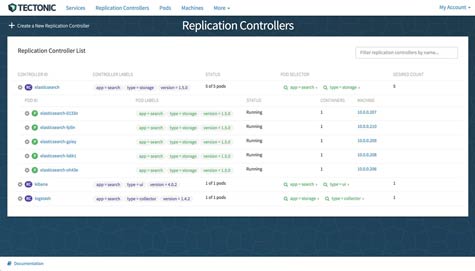
CoreOS today took the wraps off a Tectonic platform that combines its distribution of Linux with the Kubernetes framework for managing containers that was developed by Google.

Fresh off another $12 million round of financing lead by Google Venture, CoreOS CEO Alex Polvi says that Tectonic is not only the first commercial implementation of Kubernetes, but that CoreOS will extend the container management framework to include support for Docker containers and the alternative Rocket container framework that CoreOS announced late last year. Polvi says integration between Kubernetes and Rocket is still under development, but CoreOS distribution will be able to support both types of containers.

While Kubernetes isn’t embedded inside the operating system, Polvi says that Kubernetes makes it possible to deploy containers across a distributed server environment versus only on a single server. The combination of Kubernetes and CoreOs makes it simpler for IT organizations to stand up these distributed server environments faster, says Polvi.
CoreOS

While containers are gaining momentum thanks to developers looking for a simpler way to deploy applications, one of the primary benefits of this shift winds up being IT operations teams that can now run more application workloads per physical server.

CoreOS has previously described Docker as being a flawed container model, yet the CoreOS distribution of Linux is one of the most widely used Docker container platforms. The degree to which organizations shift their allegiance to Rocket remains to be seen. But instances of Kubernetes that support both container types will make it a lot simpler for organizations to evaluate the merits of both containers without necessarily having to deploy a separate management framework for each of them.

MV

Michael Vizard is a seasoned IT journalist, with nearly 30 years of experience writing and editing about enterprise IT issues. He is a contributor to publications including Programmableweb, IT Business Edge, CIOinsight and UBM Tech. He formerly was editorial director for Ziff-Davis Enterprise, where he launched the company’s custom content division, and has also served as editor in chief for CRN and InfoWorld. He also has held editorial positions at PC Week, Computerworld and Digital Review.

Recommended for you...

Hyperscalers: Will They Upend the Mainframe Market?
Tom Taulli
Nov 22, 2021
PagerDuty Report: Stress on IT Teams on the Rise
Mike Vizard
Jul 30, 2021
VMware Adds Subscription Option for VMware Cloud
Mike Vizard
Mar 31, 2021
IT Business Edge Logo

The go-to resource for IT professionals from all corners of the tech world looking for cutting edge technology solutions that solve their unique business challenges. We aim to help these professionals grow their knowledge base and authority in their field with the top news and trends in the technology space.

Property of TechnologyAdvice. © 2025 TechnologyAdvice. All Rights Reserved

Advertiser Disclosure: Some of the products that appear on this site are from companies from which TechnologyAdvice receives compensation. This compensation may impact how and where products appear on this site including, for example, the order in which they appear. TechnologyAdvice does not include all companies or all types of products available in the marketplace.