

Top 10 Strategic Technology Trends for 2016

Canonical today moved to make it simpler to deploy both its Ubuntu distribution of Linux as well as OpenStack on top of containers running at the machine level.
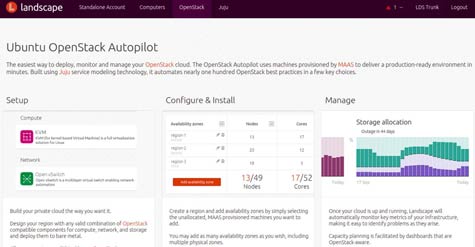
Version 15.10 of Ubuntu Server, codenamed Wily Werewolf, is one of the first distributions of Linux to support the latest Liberty versions of OpenStack and brings with it the general availability of OpenStack Autopilot, which automates the provisioning of clouds based on the OpenStack cloud management framework.
In addition, Canonical has included LXD machine containers, which Dustin Kirkland, Ubuntu Cloud product manager and strategist, says is a lighter-weight machine-level hypervisor alternative on which Ubuntu and other guest operating systems can be deployed.
Finally, Canonical is providing a technology preview of the Nova massively parallel compute engine project of OpenStack running on that hypervisor and support for DPDK fast network packet processing, which are a set of libraries from Intel that can be used to create a data plane.
Kirkland says that, in general, Canonical is on a dual path when it comes to operating system upgrades. It provides early access to emerging technologies via updates such as Wily Werewolf, while committing to upgrading the production version of Ubuntu server every two years. As part of that strategy, Canonical has embraced both machine-level containers to make it simpler to deploy core components of the operating system as well as Docker containers that make it simpler to deploy applications on top of Ubuntu.
Clearly, Canonical is attempting to leverage the disruption brought on by emerging technologies such as OpenStack and containers to entice organizations to embrace its distribution of Linux, which Kirkland says provides a platform that is adept at giving support for advanced technologies much sooner than rival operating systems. The degree to which the average IT organization is willing to embrace those changes naturally varies. But at a time when IT agility is more prized than ever, the number of IT organizations willing to embrace rapid change is most certainly on the rise.