Five Ways to Realize Server Room Profitability Navigating IBM mainframe pricing has always been an adventure in complexity. When it comes to deploying workloads on a mainframe, the options are numerous. Most mainframe shops always have a nagging feeling that they are paying too much for something; they are just never sure what. To help […]

Five Ways to Realize Server Room Profitability

Navigating IBM mainframe pricing has always been an adventure in complexity. When it comes to deploying workloads on a mainframe, the options are numerous. Most mainframe shops always have a nagging feeling that they are paying too much for something; they are just never sure what.
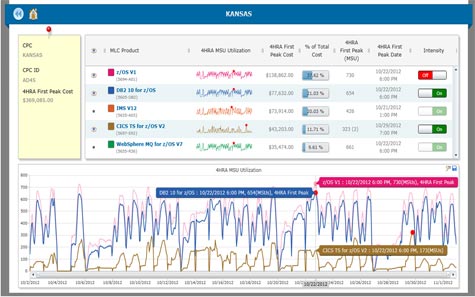
To help mainframe customers get a better handle on mainframe software costs, BMC Software has released BMC Cost Analyzer for zEnterprise, a predictive analytics application that has been optimized to analyze mainframe software spending.
According to Jay Lipovich, director of solutions marketing for BMC, the BMC Cost Analyzer for zEnterprise not only identifies where software spending is being allocated, it also allows IT organizations to develop various scenarios under which they can determine the true cost of moving a particular workload under one mainframe licensing scheme or another.
To attract more workloads to the mainframe, IBM has developed an array of licensing options that make it cost effective to run Linux or DB2 workloads on a mainframe. These options help reduce costs, but they also introduce a level of complexity that often makes it difficult to actually figure out what workloads should run where on a mainframe.
Lipovich says BMC Cost Analyzer for zEnterprise could save the average mainframe shop as much as 20 percent of mainframe licensing costs. But the software itself is restricted to workloads running on a mainframe, so it does not include any metrics relating to the movement of those workloads to distributed systems that might be linked to that mainframe.
Lower-end mainframe systems have been cannibalized by distributed systems, but as IBM has introduced more powerful mainframes, the number of workloads running on those systems has actually increased. As a result, BMC contends that software costs on mainframes have actually been increasing 7 percent annually, on average.
The challenge is figuring out how to best take advantage of all the licensing schemes that IBM has created to make those mainframes more financially appealing. After all, every dollar saved on licensing costs is yet another dollar that can be reinvested elsewhere.
MV
Michael Vizard is a seasoned IT journalist, with nearly 30 years of experience writing and editing about enterprise IT issues. He is a contributor to publications including Programmableweb, IT Business Edge, CIOinsight and UBM Tech. He formerly was editorial director for Ziff-Davis Enterprise, where he launched the company’s custom content division, and has also served as editor in chief for CRN and InfoWorld. He also has held editorial positions at PC Week, Computerworld and Digital Review.