
The biggest objection when it comes to public cloud computing is security. Many organizations are still simply not comfortable hosting workloads on IT infrastructure they don’t own, especially if that workload involves anything they view as strategic intellectual property. Looking to help ease those fears, Barracuda Networks today announced it is making available a free 90-day cloud license for Barracuda Web Application Firewall and Barracuda NextGen Firewall software running on Amazon Web Services (AWS) and Microsoft Azure public clouds.
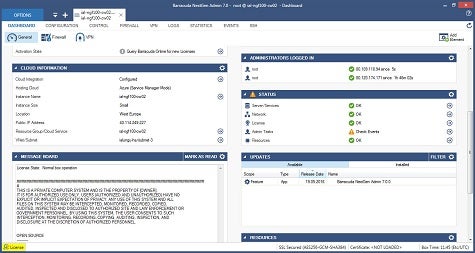
Michael Hughes, senior vice president of worldwide sales at Barracuda Networks, says that while public cloud infrastructure providers secure their infrastructure, it’s up to the IT organization to secure the applications that run on those clouds. Barracuda Networks wants to reduce the friction with making the move to the cloud by making it simpler for application developers to attach a firewall to any application being developed on a public cloud, says Hughes.
“We want to make it easier for developers, especially in organizations that have embraced a DevOps model for building and deploying applications,” says Hughes.
Naturally, Barracuda Networks is hoping that once those applications make it into production, the IT operations team charged with maintaining those applications will then opt to retain the firewalls that are already in place.
In general, the cost of the infrastructure needed to develop applications continues to approach zero. Organizations still need to acquire the talent to build those applications. But the costs associated with experimenting with developing an application that can be deployed either on the cloud it was developed on or moved to an on-premises environment have never been lower. Because of those reduced costs, more developers than ever are starting to build proof of concepts for new applications in the cloud first and asking for permission second. Given that behavior, it’s incumbent on everyone involved, like it or not, to make sure developers can experiment with those applications as safely as possible.