


When it comes to communications systems, it seems more might not necessarily be better.
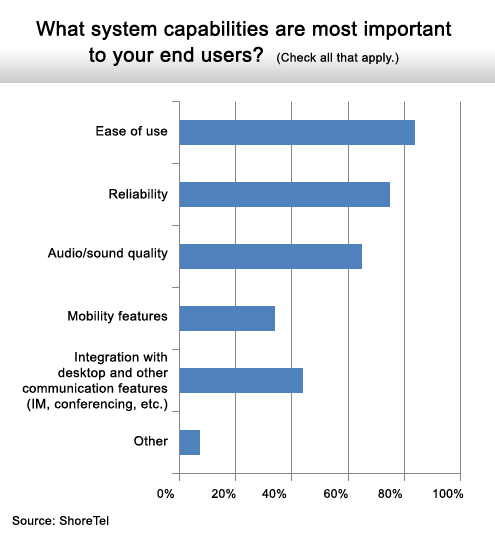
ShoreTel recently surveyed 475 potential customers — C-level execs and IT/telecom professionals — about what they believe are most important factors when choosing a communications system. Overwhelmingly, respondents said they want a system that is simple and easy to use.
In fact, 80 percent of the respondents believe ease of use and reliability are the most important unified communication capabilities, while 76 percent view ease of management as the most important.
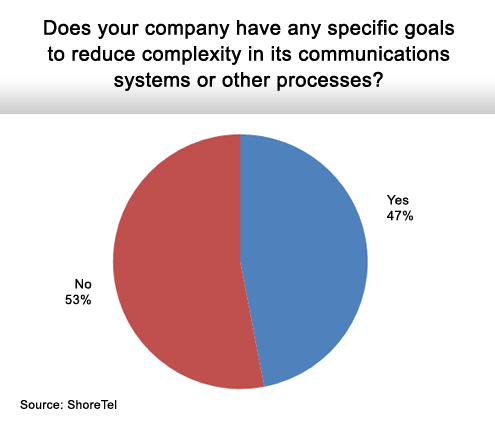
When ranking the causes of complexity in their current communications systems, integrating communications systems with business processes was the highest at 44 percent, followed by integrating new equipment with legacy system, at 38 percent. Number of remote or mobile workers and range devices came in third and fourth, at 29 percent and 22 percent, respectively.
When asked to rate their frustration level with technology providers, and specifically market leaders in the VoIP or unified communications space, 65 percent of respondents said they were frustrated by the high number of invisible costs after purchase. Another 63 percent were frustrated by systems that proved difficult and costly to manage, and 57 percent of respondents said they were frustrated by complex systems that are difficult to use and learn as well as support issues such as with remote users.
There are important lessons companies can learn from these survey results, no matter what the technology. Sometimes, simplicity can make a customer happier than myriad bells and whistles that provide the gee-whiz factor at first but end up being responsible for the hair-pulling experiences during the integration and “getting to know you” stages.
Vendors may want to take a step back and think about the results of this survey before loading their technology with multiple features. Sometimes, less really is more.

Click through for results from a ShoreTel unified communications survey.
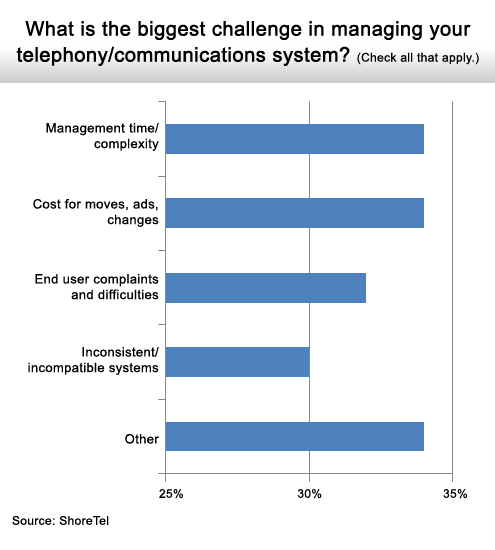
Managing unified communications is anything but easy.
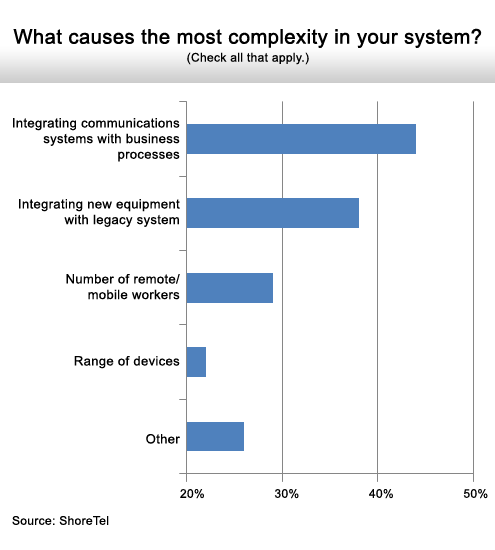
Setting the systems up is the easy part.
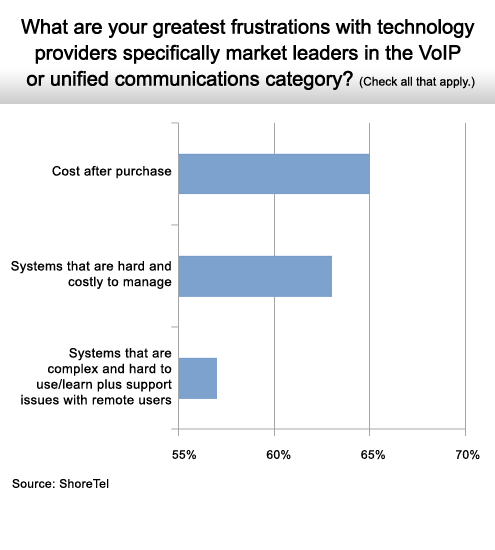
The total cost of ownership for unified communications is high.
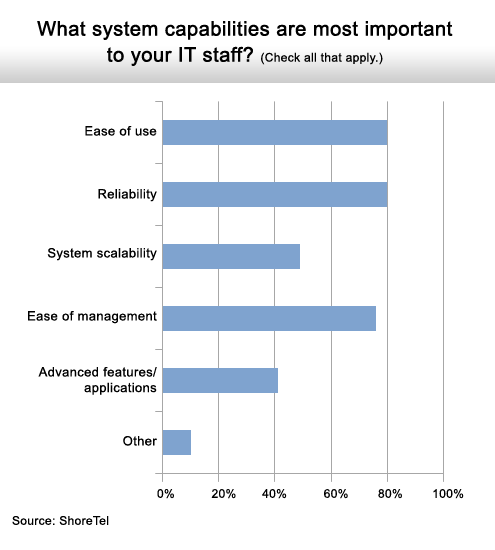
The IT staff needs an approach to unified communications that is easy to operate.
Same goes for the end users.
Complexity is the enemy of communications.