Care providers face an urgent, internal battle every day: security and compliance versus productivity and service. For most health care organizations, the fight is an easy one. Providing quick, high-quality care wins almost every single time.
Much to the dismay of health care IT, though, this often leads medical professionals to circumvent established policies and choose faster, more convenient — and usually less secure — methods of moving and sharing patient records and sensitive information. In fact, according to a 2013 report released by The Open Security Foundation, more than 2,600 health care data breaches occurred in 2012, exposing 267 million-plus records. While these breaches cannot all be directly linked back to the security versus productivity dilemma, they highlight the need for change.
Here are five ways, identified by GlobalSCAPE, Inc., a leading provider of secure, information exchange solutions, that medical IT professionals can better partner with their team of providers to guarantee that care, speed, security, and compliance all remain priorities.
Click through for five ways medical IT professionals can better partner with their team of providers to guarantee that care, speed, security, and compliance all remain priorities, as identified by GlobalSCAPE, Inc.

Doctors, nurses and other clinicians face immense pressure every day, and won’t stand for any policy that holds them back from doing their jobs quickly. For IT, that means understanding the environment in which care providers operate. That is, care providers often need to contact and share information with patients while outside of the organization’s secure and managed infrastructure, perhaps while at home or on the road. The task for IT is to make sure that all policies enable productivity and provide tools that cater to the on-demand needs of today’s health care worker.

Education is crucial. Teach your staff about the risk of data breaches. Do they understand the financial ramifications for the organization? Do they understand the negative publicity a data breach creates? Do they understand the risks vs. benefits for the patient?
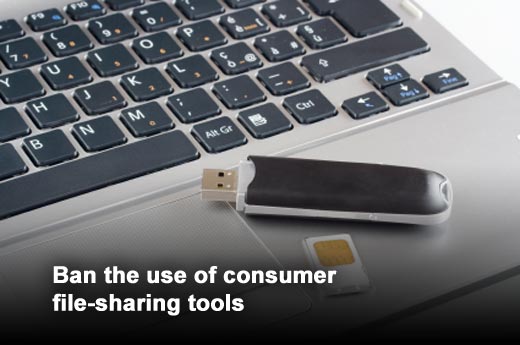
USB drives, consumer file-sharing websites like Dropbox, and unsecured email accounts are not acceptable means of moving digital patient records. While methods like these are quick and easy, they lack security, management and control — and they break compliance protocols. The ban on using consumer tools like this should be strictly enforced by IT.
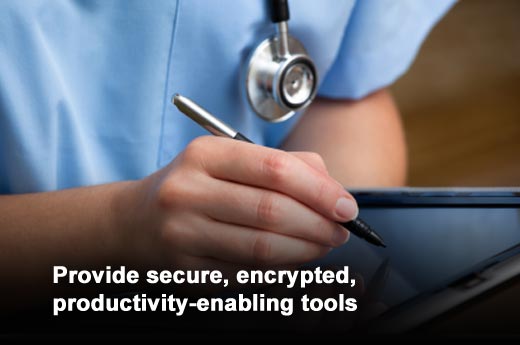
If you eliminate a way of doing business, make sure there’s a suitable alternative. IT must provide secure, compliant, and easy-to-use tools for securely exchanging and transferring sensitive patient information. The tools should meet all compliance requirements, such as HITECH, HIPAA, ACA, and others, and cater to the diverse file transfer and on-demand needs of today’s health care organizations. Remember: If you don’t provide a strong, easy-to-use tool, employees will circumvent its use and find another way to be productive.
Make sure the tools and policies you put in place work for your front-line care providers. Ask the employees what additional tools and functionality they need, and how data management policies can be improved. IT can only help if it knows what is working and not working for its employees.
Health care organizations must bridge the gap between IT, care providers, and patients, to ensure the secure and compliant transfer of patient data and digital health records.