Technology has turned marketing into a 24-hour business and consumer expectations around digital information delivery are increasing at warp speed. This challenging model is forcing consumer-centric organizations to rethink how they manage their creative teams. FILTER, a digital solutions agency and a leader in creative staffing, has identified the five trends impacting hiring highlighted in this slideshow.
Click through for five trends impacting hiring, as identified by FILTER.
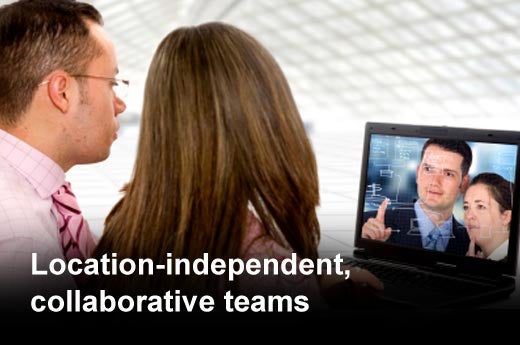
The business world is in the midst of a shift in the dominant workflow away from large, centralized and tightly controlled initiatives to smaller, ad-hoc teams that are more nimble, innovative and productive. Today’s more fluid environment demands a more collaborative and less hierarchical approach. To keep pace, companies are utilizing agile and location-independent teams comprised of contractors. Smaller teams, by default, require less communication, less policy, and less procedure. This lack of encumbrance allows them to move more quickly and respond to change more rapidly. The continued rise of mobile technologies allows work to be done anywhere and companies are having to adapt to a growing mobile workforce.

Companies that downsized during the last recession are increasingly seeing the value of workers with multiple and varied skill sets. These professionals, who are beginning to be called “multidisciplinarians,” thrive in collaborative environments. Because many are self-taught and have learned on the job, they have the ability to sense where their contributions are complementary and how to fit in just right to make a team well balanced, highly functional, and extremely productive.

During the boom and bust of the dot-com era, and then again during the last economic downturn, companies were forced to scale back their workforces. Now, companies and workers alike are flocking to staffing agencies for scalable staffing and employment solutions. For companies, it allows them the ability to scale their work force up or down depending on their business needs and bring in highly specialized workers only when they need them. For workers burned by layoffs during the last recession, scalable staffing provides an employment solution in which they have greater control of when, where, and how they work. It’s a win-win situation for everyone.

Recruitment and hiring are expensive and time-consuming propositions for any organization. As companies slowly begin to add back more full-time and permanent employees, finding the right candidate in a pool of hundreds or thousands of applicants is a daunting task. More than ever, companies are turning over recruitment duties to staffing agencies that are in constant contact with top talent and can quickly find and screen only the most experienced candidates. The top candidates often become temporary contract workers for these companies, allowing the organization to test them out in real-world situations. These “extended interviews,” which typically last 30-90 days before permanent employment is offered, allow companies to have confidence that they’ve hired the right candidate for the job.
Companies are quickly realizing that workplace experience isn’t the only factor to consider when hiring. Each generation – from Millennials (born after 1980), to Gen X’ers (born 1961 to 1980), and Baby Boomers (born 1946 to 1961) – have a different work style and set of values. For example, Baby Boomers are known for their achievement-oriented, dedicated and career-focused personalities. They respect the hierarchy of the workplace. Gen X’ers are often categorized as independent, resourceful and self-sufficient and they embrace a hands-off management philosophy. Millennials, also referred to as Digital Natives, are the latest generation to enter the work force. As their nickname suggests, they grew up with digital technology and have a natural level of fluency. Companies are taking these generational traits into consideration when hiring and are increasingly turning to staffing agencies to hire Millennials when technology and communications are of specific importance.