

The Struggle to Manage the Complexity of Modern IT

Networks as a whole are becoming easier to manage thanks to the rise of application programming interfaces (APIs) that are used to create software-defined networks (SDNs) that can be managed at a higher level of abstraction. Anuta Networks is taking that concept one step higher with the unveiling this week of NCX Enterprise, a controller that takes advantage of RESTful APIs to create a framework for using software to define multiple heterogeneous networks.
The last year has seen a rise in the number of SDNs. Kiran Sirupa, senior product manager for Anuta Networks, says the goal with NCX Enterprise is to take that concept to its next logical conclusion in the form of a controller that allows organizations to manage multiple networks from different vendors as if they were one logical SDN.
Rather than locking in IT organizations to a set of proprietary networks, Sirupa says RESTful APIs integrated with a network controller will give IT organizations a way to centralize the management of multiple heterogeneous networks and the flexibility to switch networking vendors as they see fit.
Anuta Networks has provided similar capabilities to service providers in the past. The NCX Enterprise, however, represents the first time Anuta Networks is making its technology available to enterprise customers.
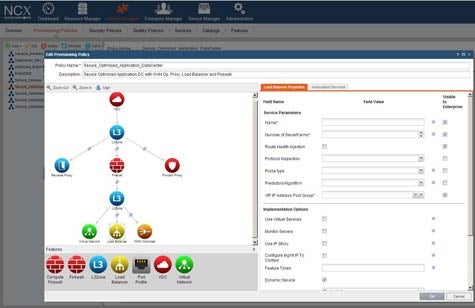
As time goes on, APIs will essentially make SDNs programmable, thereby giving developers more direct control over network resources within the construct of policies defined by network administrators. Sirupa says right now IT staffs are being asked to master a mix of command line interfaces (CLIs) and APIs in a world full of heterogeneous networks. In contrast, Sirupa says the NCX Enterprise controller essentially provides an overlay for creating a common SDN framework across both physical and virtual networks.
All things SDN are piquing a lot of interest these days. But rather than viewing SDNs as way to simplify the management of one network, perhaps the time has come to start thinking of SDNs as a way to simplify the management of all networks.