


As we continue to see companies broaden their reach globally in this digital age, an important consideration is staying connected with business partners and customers alike, regardless of time zone or location. Many companies depend on their communication systems more than they know.
When seeking a new communications system, one of the following is likely true: You’re seeking a better fit for your business, moving locations, or starting a new venture. Adam Simpson, founder of Easy Office Phone, a leading provider of cloud-based business phone services, has identified seven key tips to consider when choosing a new service that’s right for your organization.

Finding the Right Phone System
Click through for seven key tips organizations should consider when selecting a new phone service, as identified by Adam Simpson, founder of Easy Office Phone.

Reliability and Back up
Demand reliability and proper back up. Cloud-based providers can be as reliable as the copper landline public telephone network that’s been around for a century. Ensure your new provider has multiple layers of redundancy and uses top-grade data centers in different geographic locations.
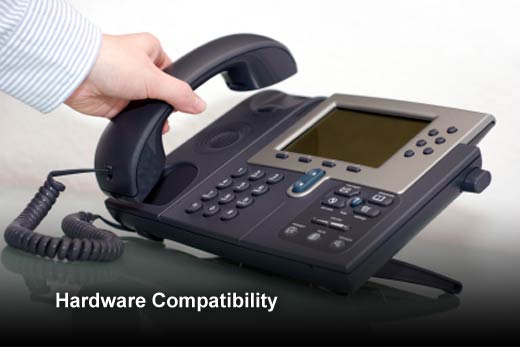
Hardware Compatibility
Ensure compatibility with hardware you already use. If you’ve already made an investment in hosted-PBX phones, and you’re simply changing providers, ensure that your hardware will be compatible with the new service. Polycom, Cisco/Linksys, Panasonic and Aastra phones are some of the most common makes with good support.

Accessibility
Ensure accessibility from anywhere. Today’s workforce is increasingly dispersed, whether mobile and/or remote-based. You’ll want to give them the ability to connect to the office phone system via smartphones and laptops, with outgoing calls showing the company’s caller ID. Over the long haul, these options can save your company money.

Customer Service
Make sure it has a well-supported customer service center. The reality is that, at some point, you will need to request support, even if it’s just for a quick feature question. Have a look at feedback from your prospective provider’s current clients. Beware of anonymous reviewers; instead, look for real testimonials that supply verifiable information such as specific individual or company names along with website addresses.

Scalability
Expect scalability for your workforce. By using a cloud-based service, adding new staff can be as simple as adding their details via a web interface and then purchasing phones for them (or, as above, installing smartphone apps).

Flexibility
Ask for flexibility for business hours and emergencies. Businesses change frequently, and your phone service should be able to do the same. Changes like these need to be quick, simple, and web-based. Regardless of holidays, abnormal office hours or natural disasters, your hours will vary and you will need to adjust your greetings accordingly.

Voice Codec Options
Pro tip: You may need more than one voice codec option. Cloud-based phone service uses a certain amount of Internet bandwidth. The impact is minor, but depending on the type of voice codec, you may be utilizing more bandwidth than you need to. In the case of staff who work remotely and have limited bandwidth, a “compressed” codec offering reduced bandwidth may be desirable.