
As the number of application workloads IT organizations are being required to manage steadily increases, inside and out of the cloud, an ability to master load balancing has become a lot more important. In fact, more organizations are looking for a way to programmatically manage load balancing across multiple types of cloud computing deployment models.
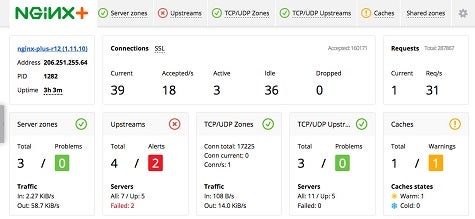
To address that issue, NGINX today updated NGINX Plus, the commercially supported version of open source load balancing software that is widely used inside and out of public cloud computing environments. Chris Lippi, vice president of products for NGINX, says NGINX Plus release 12 improves configuration management within a cluster, and enhances the programmability provided via nginScript. Other enhancements include deeper monitoring via instrumentation of application resources as well as tools to make sure load‑balanced applications are auto-scaling correctly.
Programmability, adds Lippi, is crucial because in the age of DevOps, many developers are taking direct control over the IT infrastructure resources their applications run on.
While most cloud service providers provide access to load balancing tools, Lippi says organizations are opting to use NGINX as part of a concerted effort to not get locked into a specific cloud service.
“Organizations want to be sure they can move between clouds,” says Lippi.
In some instances, that may be another public cloud service provider, adds Lippi. In other cases, Lippi notes, it might be their own private cloud.
As cloud computing continues to mature, more IT organizations are starting to take more notice of where the lines are between standard interfaces and proprietary services that lock them into a specific cloud provider. The days when organizations blindly embraced public clouds are over. Instead, many organizations are starting to embrace a more cloud-neutral approach that enables them to maintain control over their own IT destinies, regardless of where an application workload happens to be running at any given time.