
SHARE
Facebook X Pinterest WhatsApp

Druva Employs AWS to Provide Backup and Recovery for VMware

2016 Cloud Security Trends: Confidence on the Rise One of the most common forms of hybrid cloud computing is VMware running on premise and the flavor of virtual machines that Amazon Web Services (AWS) makes available using open source Xen hypervisors. Because both environments build on fundamentally different virtual machine architectures, using AWS as an […]

Written By
MV
Mike Vizard
Feb 5, 2016
Slide Show

2016 Cloud Security Trends: Confidence on the Rise

One of the most common forms of hybrid cloud computing is VMware running on premise and the flavor of virtual machines that Amazon Web Services (AWS) makes available using open source Xen hypervisors. Because both environments build on fundamentally different virtual machine architectures, using AWS as an extension of a VMware environment has until recently been a challenge.

But now that AWS has opened up more of the application programming interfaces (APIs) surrounding its virtual machine, that’s about to change. One of the first vendors to take advantage of this change is Druva, a provider of backup and recovery services hosted on AWS that is now extending that capability to add support for VMware.

Druva CEO Jaspreet Singh says that rather than having to back up files locally and then move them into the cloud, the Druva Phoenix service is designed to continuously stream data from VMware or a physical server directly into AWS. In the event of a disaster, IT organizations can spin up AWS virtual machines to provide access to that data in a matter of minutes.
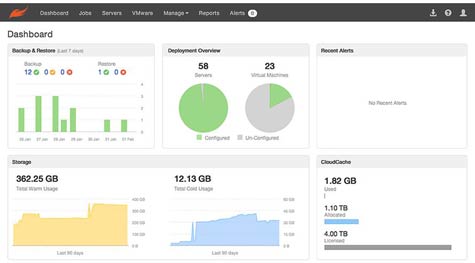
Druva

By definition, Singh says, the cloud provides a more agile approach to disaster recovery that eliminates the need for acquiring and maintaining massive amounts of data protection software and hardware on premise. Rather than waiting to recover data from the cloud, Druva Phoenix provides the ability to keep applications running without any interruption to the business until the IT organization can move data back on premise.

Of course, not every application workload is critical enough to warrant this level of continuity. But for some mission-critical applications, every minute of downtime generally costs the business more than it can afford.

MV

Michael Vizard is a seasoned IT journalist, with nearly 30 years of experience writing and editing about enterprise IT issues. He is a contributor to publications including Programmableweb, IT Business Edge, CIOinsight and UBM Tech. He formerly was editorial director for Ziff-Davis Enterprise, where he launched the company’s custom content division, and has also served as editor in chief for CRN and InfoWorld. He also has held editorial positions at PC Week, Computerworld and Digital Review.

Recommended for you...

Strategies for Successful Data Migration
Kashyap Vyas
May 25, 2022
Leveraging AI to Secure CloudOps as Threat Surfaces Grow
ITBE Staff
May 20, 2022
The Emergence of Confidential Computing
Tom Taulli
Apr 20, 2022
IT Business Edge Logo

The go-to resource for IT professionals from all corners of the tech world looking for cutting edge technology solutions that solve their unique business challenges. We aim to help these professionals grow their knowledge base and authority in their field with the top news and trends in the technology space.

Property of TechnologyAdvice. © 2025 TechnologyAdvice. All Rights Reserved

Advertiser Disclosure: Some of the products that appear on this site are from companies from which TechnologyAdvice receives compensation. This compensation may impact how and where products appear on this site including, for example, the order in which they appear. TechnologyAdvice does not include all companies or all types of products available in the marketplace.