

Selecting a Cloud Service: 5 Questions to Ask Prospective Providers

One of the most frustrating and expensive aspects of cloud computing is the time and expense associated with moving data into Microsoft Office 365. To help simplify that process, Cloudtenna in collaboration with Microsoft today announced they are working together to employ metadata making it possible for Microsoft Office 365 to access local data without having to actually transfer into the cloud.
Cloudtenna CTO Bryan Pham says rather than having to transfer existing Microsoft Office data in the cloud, the DirectShare file synchronization technology created by Cloudtenna allows end users to access data both on-premises and in the cloud without sacrificing collaboration capabilities such as the co-editing of documents.
Cloudtenna has been employing DirectShare to provide a file synchronization service that leverages machine learning algorithms that make it simpler to search large repositories of distributed files. That approach allows Cloudtenna to make local data available to any number of cloud applications without having to create a copy of the file. Microsoft is only the first use case for this approach.
“Over time, we’ll look for other partners,” says Pham.
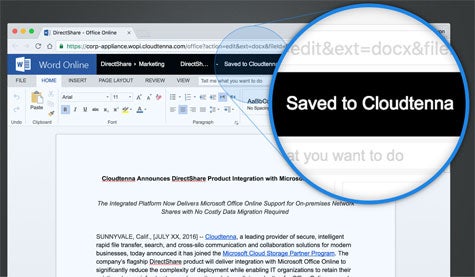
For Microsoft, the alliance with Cloudtenna may prove critical. Microsoft has a keen interest in accelerating the rate at which enterprise IT organizations are making the shift to the cloud. The challenge enterprise IT organizations face is that migrating data to Microsoft Office 365 is slow and often costly. DirectShare eliminates that issue by making existing local data available to end users, erasing the divide between Microsoft Office 365 and Microsoft Office, says Pham.
Naturally given current data migration challenges, we don’t know how many enterprise IT organizations will make the leap to Microsoft Office 365. No doubt, the rate is rapid for the moment. But the one thing Microsoft is desperate to avoid is for the rate to flatten out or decline because so much of its cloud ambition is dependent on the ultimate success of Microsoft Office 365.
Save
Save