
SHARE
Facebook X Pinterest WhatsApp

CloudBolt Extends Scope and Reach of Cloud Management

Multi-Cloud 101: 7 Things You Need to Know While true hybrid cloud computing remains largely a gleam in the eye of most IT professionals, most IT organizations are now routinely dealing with multiple clouds. Instead of pouring all their application workloads into one public cloud platform, they are mixing and matching them based on their […]

Written By
MV
Mike Vizard
Jul 7, 2016
Slide Show

Multi-Cloud 101: 7 Things You Need to Know

While true hybrid cloud computing remains largely a gleam in the eye of most IT professionals, most IT organizations are now routinely dealing with multiple clouds. Instead of pouring all their application workloads into one public cloud platform, they are mixing and matching them based on their performance and governance requirements.

To make it simpler to manage those cloud deployments, CloudBolt today released version 6.0 of the CloudBolt Cloud Management Platform, which makes it simpler to autoscale IT infrastructure resources within a cloud as well as dynamically invoke external public cloud resources from within an on-premises IT environment.

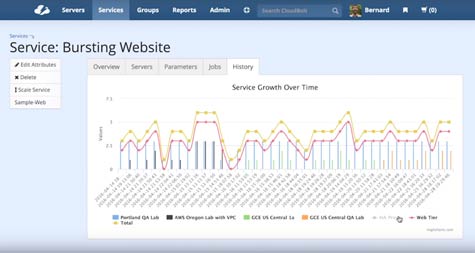
The concept of “cloud bursting” has been around for a while now. But CloudBolt CEO Jon Mittelhauser says most IT organizations don’t take full advantage of this capability because it’s too difficult to set up and manage. But as IT organizations become more comfortable with the cloud in general, Mittelhauser says it’s only a matter of time before “cloud bursting” becomes more routine.
CloudBolt-Cloud-Bursting

In the meantime, Mittelhauser says more IT organizations will be looking for a centralized console to manage public and private cloud computing deployments. To that end, Mittelhauser says the latest release of the CloudBolt Cloud Management Platform also provides deeper integration with Microsoft Azure, Google Cloud Engine and Oracle Cloud services as well as support for third-party load balancers from vendors such as F5 Networks.

Despite the fact that public cloud computing services are now more than 10 years old, many IT organizations are still coming to terms with the cloud. For the moment at least, many are content to manage most clouds in isolation from one another. But it’s only a matter of time before the management of those clouds inevitably converges.

Save

Save

MV

Michael Vizard is a seasoned IT journalist, with nearly 30 years of experience writing and editing about enterprise IT issues. He is a contributor to publications including Programmableweb, IT Business Edge, CIOinsight and UBM Tech. He formerly was editorial director for Ziff-Davis Enterprise, where he launched the company’s custom content division, and has also served as editor in chief for CRN and InfoWorld. He also has held editorial positions at PC Week, Computerworld and Digital Review.

Recommended for you...

Strategies for Successful Data Migration
Kashyap Vyas
May 25, 2022
Leveraging AI to Secure CloudOps as Threat Surfaces Grow
ITBE Staff
May 20, 2022
The Emergence of Confidential Computing
Tom Taulli
Apr 20, 2022
IT Business Edge Logo

The go-to resource for IT professionals from all corners of the tech world looking for cutting edge technology solutions that solve their unique business challenges. We aim to help these professionals grow their knowledge base and authority in their field with the top news and trends in the technology space.

Property of TechnologyAdvice. © 2025 TechnologyAdvice. All Rights Reserved

Advertiser Disclosure: Some of the products that appear on this site are from companies from which TechnologyAdvice receives compensation. This compensation may impact how and where products appear on this site including, for example, the order in which they appear. TechnologyAdvice does not include all companies or all types of products available in the marketplace.