

Ten Vulnerabilities that Impact Enterprise Cloud Apps

More than a few organizations have made big bets on software-as-a-service (SaaS) applications only to discover that end users are not embracing them as extensively as they might have expected.
To help organizations get a better handle on the pace and extent to which cloud applications are being used, Applango this week unfurled a namesake cloud service through which IT organizations can monitor usage of SaaS applications.
Most SaaS applications have an application programming interface (API). Applango CEO Daniel Sarfati says Applango makes use of those APIs to collect data that enables IT organizations to see not only how many users an application has, but also the degree to which that software is being used.
Right now, most organizations are struggling with making the shift to cloud. For example, if users are reluctant to give up spreadsheets running on their desktops, these users won’t likely make much use of a business analytics application in the cloud. Conversely, it’s also possible that one SaaS application or another is significantly more popular than expected, which leads IT to increase the number of users who are allowed to access that application.
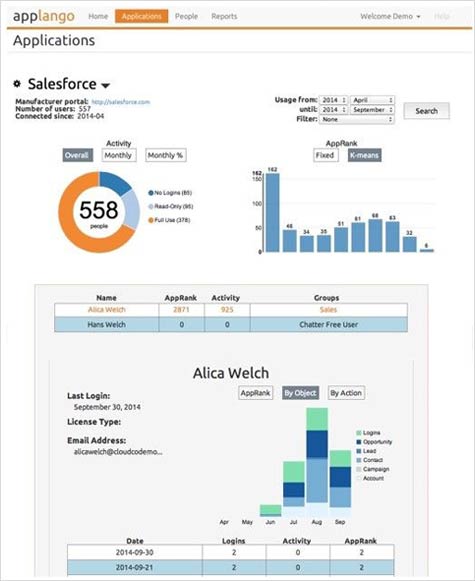
License management products, of course, have been around for years. But Sarfati says none of them are optimized for monitoring and reporting on usage of SaaS applications. In addition, Sarfati says that Applango as a cloud service can be up and running in a matter of minutes.
Software that turns into “shelfware” has been a challenge for IT since the first packaged application was acquired. But the same issues can also apply to SaaS applications. The trouble is that when software is delivered as part of a monthly service contract, it’s more difficult to tell how much it is being used. While that may not be much of an issue for SaaS applications that only cost a few dollars a month, when it comes to customer relationship management (CRM) and other enterprise-class applications, those monthly fees can really add up.
SaaS application usage is like software usage—it’s often difficult to predict how an app will be received by end users. But beyond the financial issues, gaining insight into what works and what doesn’t should not only help IT make more informed decisions about renewing that application, but also the licensing of any other SaaS applications going forward.