
SHARE
Facebook X Pinterest WhatsApp

Xplenty Aims to Simplify Management of Big Data Apps

5 Steps to Wrangle Uncontrolled Data Flow Building a Big Data application is one thing. Trying to live with that application over an extended amount of time is another. Xplenty has been squarely focused on the latter by making available a cloud service that simplifies integration of multiple sources of Big Data. Now Xplenty has […]

Written By
MV
Mike Vizard
Jan 3, 2017
Slide Show

5 Steps to Wrangle Uncontrolled Data Flow

Building a Big Data application is one thing. Trying to live with that application over an extended amount of time is another. Xplenty has been squarely focused on the latter by making available a cloud service that simplifies integration of multiple sources of Big Data. Now Xplenty has acquired Driven, Inc., a provider of application performance management (APM) tools optimized for Big Data applications running on Hadoop that is also the inventor of the open source Cascading project that many organizations employ to manage workflow across Big Data applications.

Fresh off also raising another $4 million in capital, Xplenty CEO Yaniv Mor says that many IT organizations are discovering how challenging Big Data applications are to manage when you consider all the data sources involved.

“There’s always a lot of changes being made to APIs and schemas,” says Mor.
xplenty

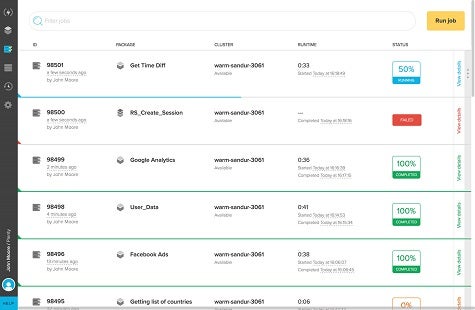
Xplenty, says Mor, is focused on masking all those changes from the IT organization via a service that assumes responsibility for the DevOps processes attached to maintaining a Big Data application. The Driven technologies will be used to extend the scope and reach of that service, says Mor.

Ultimately, Mor says organizations need to decide how much time they want Big Data specialists that make well into six figures spending on Big Data plumbing issues. The goal, says Mor, should be to make it simpler for those specialists to concentrate on analytics that add real value to the business.

Big Data applications running on top of platforms such as Hadoop are poised to come into their own in 2017. But just because an organization built and deployed a Big Data application, it doesn’t necessarily follow that they need to be responsible for every low-level function associated with its ongoing care and maintenance.

Save

MV

Michael Vizard is a seasoned IT journalist, with nearly 30 years of experience writing and editing about enterprise IT issues. He is a contributor to publications including Programmableweb, IT Business Edge, CIOinsight and UBM Tech. He formerly was editorial director for Ziff-Davis Enterprise, where he launched the company’s custom content division, and has also served as editor in chief for CRN and InfoWorld. He also has held editorial positions at PC Week, Computerworld and Digital Review.

Recommended for you...

Data Lake Strategy Options: From Self-Service to Full-Service
Chad Kime
Aug 8, 2022
What’s New With Google Vertex AI?
Kashyap Vyas
Jul 26, 2022
Data Lake vs. Data Warehouse: What’s the Difference?
Aminu Abdullahi
Jul 25, 2022
IT Business Edge Logo

The go-to resource for IT professionals from all corners of the tech world looking for cutting edge technology solutions that solve their unique business challenges. We aim to help these professionals grow their knowledge base and authority in their field with the top news and trends in the technology space.

Property of TechnologyAdvice. © 2026 TechnologyAdvice. All Rights Reserved

Advertiser Disclosure: Some of the products that appear on this site are from companies from which TechnologyAdvice receives compensation. This compensation may impact how and where products appear on this site including, for example, the order in which they appear. TechnologyAdvice does not include all companies or all types of products available in the marketplace.