

5 Big Ways Big Data Is Changing the IT Network

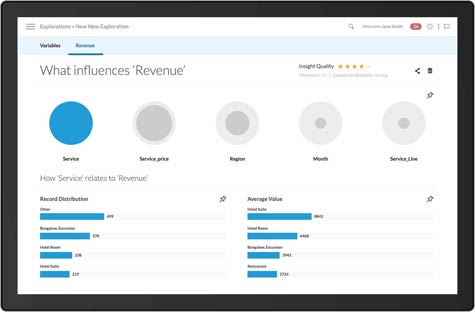
In an effort to make analytics more readily accessible, today SAP unfurled its Big Data analytics application running in the cloud running on top of the SAP HANA in-memory computing platform.
Nic Smith, senior director of marketing for analytics at SAP, says rather than requiring IT organizations to stand up their own instances of Big Data applications running on top of SAP HANA, organizations can now take advantage of the SAP Cloud Analytics service, codenamed Project Orca, which is available on demand.
Just as significantly, Smith notes that the SAP service combines all the functionality of an analytics application with data visualization and business intelligence reporting tools that previously would have required IT organizations to deploy and manage three separate stacks of software.
Smith says that SAP envisions a world where analytics in general is more broadly available both directly via the cloud and with third-party applications that are invoking application programming interfaces (APIs) to access analytics processed on HANA in the cloud.
SAP views HANA essentially as a superset of Big Data platforms through which organizations will funnel data in real time from multiple data sources, including Hadoop and Apache Spark clusters. The end goal, says Smith, is to provide a more seamless experience in the cloud where SAP is trying to drive more organizations to deploy its application, which it will also manage on their behalf. Smith notes that by making use of HANA as the core platform for all those applications, the need to replicate data between applications is also sharply reduced.
It remains to be seen, however, exactly where most organizations will want to run analytics applications. While it’s generally less expensive to run analytics applications in the cloud, many organizations worry that the data being analyzed is too sensitive to be kept off premise. Regardless of the approach taken, however, Smith says that analytics ranging from the predictive to prescriptive will soon be embedded inside nearly all enterprise applications.