

How to Evaluate Predictive Analytics for Your Business

Aiming to provide IT organizations with a suite of analytics applications that can be managed as a cloud application, SAP this week at an SAP TechEd 2016 Barcelona conference announced that its portfolio of SAP BusinessObjects Analytics applications can now run on top of the SAP HANA Cloud Platform, the company’s implementation of the open source Cloud Foundry platform-as-a-service (PaaS) environment.
Dave Williams, SAP vice president of product marketing for enterprise performance management (EPM) and governance, risk, and compliance (GRC), says SAP is trying to make it simpler for IT organizations to deploy an analytics environment by providing the underlying PaaS layer with SAP BusinessObjects Analytics. IT organizations can then choose to deploy SAP analytics software on-premises or in a hosted cloud environment as they see fit, says Williams.
At the same time, SAP for the first time is including an ability to set up a live connection between BusinessObjects Analytics and its suite of SAP S/4 HANA suite of ERP applications. A similar live connection capability is planned for SAP Business Warehouse software in 2017.
SAP this week also revealed it has infused its analytics applications with machine learning algorithms that can be used to automate data profiling, error detection and even recommend specific type of data visualizations.
Finally, SAP announced that the SAP Digital Boardroom application that SAP uses SAP BusinessObjects Analytics to drive is now available on the Microsoft Surface Hub.
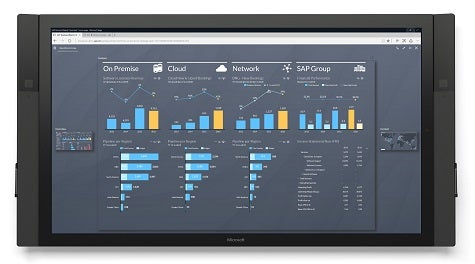
In general, Williams says SAP is trying to advance predictive decision making by making it simpler for end users to drill down into any set of data to model various what-if scenarios.
“We’re providing real-time introspection of data,” says Williams.
The degree to which business executives appreciate that capability enough to switch to the SAP analytics platform remains to be seen. No doubt, business users can now make more informed decisions using data in real time. It’s just now of question of when their appreciation of that capability might catch up to what the analytics technology can provide.
Save
Save
Save