

Cloud Contracts: Six Items CIOs Need to Know Before Signing

Over the last couple of years, a small cottage industry has emerged to help IT organizations contain public cloud computing costs at a time when it only takes a few clicks to spin up a virtual machine. Now one of the providers of these tools is moving to extend visibility into the cost of cloud computing by acquiring a provider of business intelligence software.
Cloudability this week announced it has acquired DataHero, a provider of a self-service BI application delivered as a cloud service. Cloudability CEO Matt Ellis says organizations not only want insight into their cloud computing costs at any given moment, but they need tools that enable them to better forecast those tools. By acquiring DataHero, Ellis says, Cloudability will soon be in a position to apply a broad range of advanced analytics that will enable organizations to better rein in cloud computing costs.
One of the major challenges with cloud computing is that spinning up a virtual machine is essentially a frictionless exercise. It used to be that the process of acquiring and provisioning a physical server acted as something of a governor on IT costs. Someone in the IT department typically needed approval to acquire that server. Now in the name of business agility, a virtual machine or container can be spun up at a moment’s notice. If organizations are not careful, they can very easily wind up spending more on IT in the age of the cloud than they ever did before.
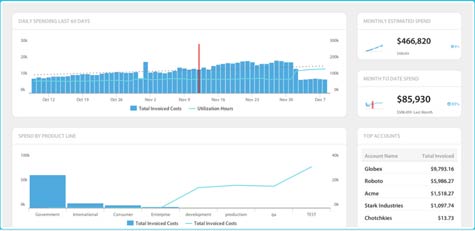
Ellis notes that many business executives have now become cognizant of this fact. As a result, they are asking for better tools to not only manage the cloud but, just as importantly, accurately predict what their true costs are going to be. Those tools, adds Ellis, will become more important as the range of cloud services that IT organizations employ continues to expand beyond major cloud service providers such as Amazon Web Services (AWS) and Microsoft Azure.
No one running a business is fond of surprises. Ellis rightly notes that for many organizations today, cloud computing represents a financial blind spot. The excitement over the agility cloud computing provides to the business will begin to wear off as organizations start to realize that while they are deriving more value from their IT investments, they just might very well wind up spending more actual dollars on IT than ever before.